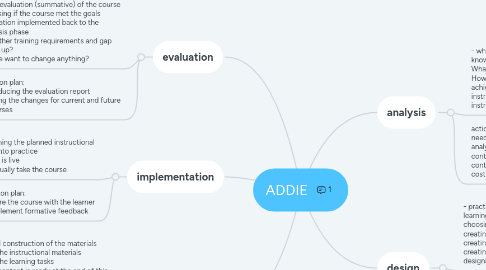
1.1. - the evaluation (summative) of the course checking if the course met the goals evaluation implemented back to the analysis phase Did other training requirements and gap show up? Do we want to change anything?
1.2. action plan: producing the evaluation report listing the changes for current and future courses
2. implementation
2.1. - transforming the planned instructional activities into practice the course is live people actually take the course
2.2. action plan: share the course with the learner implement formative feedback
3. development
3.1. - the actual construction of the materials allocating the instructional materials allocating the learning tasks the actual content is ready at the end of this phase testing the course (with individuals, smaller and larger groups)
3.2. action plan: checking whether existing materials could be used deciding on new materials/ technology (depending on budget) designing graphics, choosing colors, applications
4. analysis
4.1. - what the learner should be able to know in the future: What is the point of the training? How can we improve the situation and achieve business goals? instructional problem defined instructional goals and objectives set
5.1. - practical decisions made: learning objectives choosing the themes for instruction creating a plausible set of learning skills creating a set of activities - deciding content creating methods and procedures designing the whole content
5.2. action plan: drafting a storyboard prototyping making all the necessary decisions about methods, structure, duration, assessment and feedback