


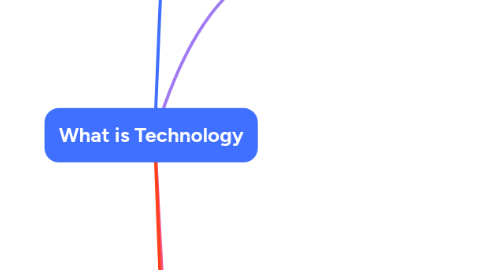
1. Why we need new technology
1.1. New technologies have the power to transform processes and enhance efficiency.
1.2. The widespread adoption of new technologies contributes to economic growth by increasing productivity and fostering innovation.
1.3. Advancements in new technologies are transforming the healthcare industry. Personalized medicine and wearable devices can provide early detection of illnesses and enhance patient care.
1.4. By leveraging the power of new technologies, societies can promote sustainable development.
2. What I think technology is now
2.1. AR (Augemented Reality) and VR (Virtual Reality) technologies continue to expand, with increasingly realistic and immersive experiences. The use of AR and VR in gaming, education, and training is growing rapidly, offering unprecedented opportunities for learning and exploration (Alhamaity & Carmichael, 2018).
2.2. AI-driven interfaces are more user-friendly, adaptable, and intuitive, enhancing the overall user experience. Examples of AI-driven interfaces include Apple's Siri and Google Assistant, which use AI algorithms to understand and respond to natural language queries (Wang et al., 2018).
2.2.1. I have learned that with many sectors adopting AI, now it's easier to make decision unlike before.
2.3. Wearable devices are becoming increasingly versatile and accurate, with the potential to revolutionize healthcare, fitness, and lifestyle trackWearable ing. Examples of advanced wearable devices include Fitbit's Charge 4 and Apple's AirPods Max, which offer fitness tracking, sleep analysis, and improved audio quality, respectively (Raabe, 2020).
2.3.1. Earlier on, it was difficult to determine any ailment before going to the hospital. With this new improved technology, a patient does not need to visit the all the time.
2.4. Blockchain and cryptocurrency technologies continue to evolve, with applications expanding beyond digital currencies into secure data storage, voting systems, and supply chain management (Yamaguchi & Haraguchi, 2019).
2.5. IoT technologies are enabling new possibilities for automation, control, and communication across diverse industries. By connecting everyday devices and utilizing big data analytics, IoT can lead to significant advancements in transportation, agriculture, and healthcare (Shen, Zhang, & Tong, 2017).
2.6. AI-driven interfaces are more user-friendly, adaptable, and intuitive, enhancing the overall user experience. Examples of AI-driven interfaces include Apple's Siri and Google Assistant, which use AI algorithms to understand and respond to natural language queries (Wang et al., 2018).
2.7. Wearable devices are becoming increasingly versatile and accurate, with the potential to revolutionize healthcare, fitness, and lifestyle tracking. Examples of advanced wearable devices include Fitbit's, Charge 4 and Apple's AirPods Max, which offer fitness tracking, sleep analysis, and improved audio quality, respectively (Raabe, 2020).
2.8. How my idea of Technology has changed?
2.8.1. Initially, I viewed technology as a means of communication, like phones and emails. Now, with the rise of social media and instant messaging, it's become an integral part of daily interactions.
2.8.2. My perspective on technology shifted as it transformed from a tool for basic research to a vast information hub. The internet allows instant access to knowledge, changing the way I learn and stay informed.
2.8.3. Technology has changed how I perceive shopping. From traditional brick-and-mortar stores, it now involves online platforms, digital payments, and the convenience of doorstep delivery.
3. References
3.1. Alhamaity, K., & Carmichael, D. (2018). AR-enhanced 3D scanning with mobile devices: a systematic literature review. ACM Transactions on Applied Perception (TAP), 5(3), 1-14. Raabe, T. (2020). What you need to know about Fitbit’s newest smartwatches. Mashable. Shen, L., Zhang, H., & Tong, Z. (2017). Review on data management in IoT. Journal of Network and Computer Applications, 73, 314-333. Wang, J., Xu, X., Li, J., Zhang, H., & Yang, Q. (2018). An empirical evaluation of wearable fitness trackers: Data-driven vs self-reported data. Computers in Human Behavior, 68, 337-345. Yamaguchi, S., & Haraguchi, Y. (2019). The new economy: An evaluation of blockchain-based peer-to-peer lending. International Journal of Technology Management, 37(2), 154-174.
4. What I thought about Technology before this Module
4.1. Personal Devices
4.1.1. fg
4.2. Transportation
4.3. Old Technology Definition
4.3.1. New ideas that have been implemented with the intention of improving efficiency, ease workload, and address evolving problems.