
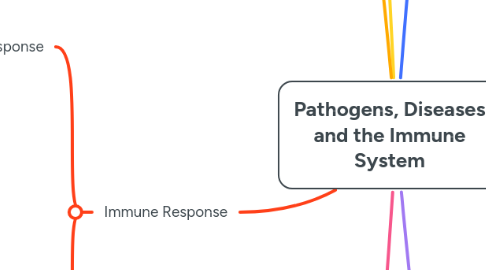
Pathogens, Diseases and the Immune System

International Oxford AQA Biology: Unit 2

1. Cell Recognition
1.1. Proteins on Cell membrane
1.2. Antigens
1.2.1. A substance that is identified as foreign or non-self
1.2.2. Cause an immune response
1.3. Immune System Recognition
1.3.1. Allow the immune system to recognise cells thare are part of the body
1.3.1.1. pathogens
1.3.1.2. toxins
1.3.1.3. cells form another body
2. Types of Communicable Diseases
2.1. Bacteria
2.1.1. Prokaryotes
2.1.2. Non-membrane bound organelles
2.1.3. Classified by their own cell walls
2.1.3.1. Peptidoglycan
2.1.4. Many differnt types
2.2. Fungus
2.2.1. Euaryotic
2.2.2. Saprophytes
2.2.3. Som are parasitic and others are pathogenic
2.2.4. Don't Photosynthesis
2.2.5. Cell Walls Compenent
2.2.5.1. Chitin
2.3. Virus
2.3.1. Non-living and infectious
2.3.2. invade living cells
2.3.3. can attack bacteria
2.3.4. reproduce rapidly and require hosts to replicate
2.3.5. has some genetic material surrounded by proteins
2.4. Protista
2.4.1. some parisitc
2.4.2. some pathogenic
2.4.3. aukaryotic organisms
3. Immune Response
3.1. Specific Response
3.1.1. Cell Mediated Response
3.1.1.1. Within cell
3.1.1.2. Antigen presenting cells
3.1.1.2.1. helper t-cells have receptors specific for the antigen
3.1.2. Humoral Response
3.1.2.1. Within body fluids
3.1.2.2. B cell with antibody specific for antigen presents foreign antigen on cell surface
3.1.2.2.1. Helper T cell with specific receptor binds to B cell
3.2. Non-Specific Response
3.2.1. Physical barriers
3.2.1.1. skin
3.2.2. Chemical barriers
3.2.2.1. stomach acid
3.2.2.2. digestive enzymes
3.2.3. Phagocytosis
3.2.3.1. phagocytes are a type of WBC
3.2.3.2. Chemoattractants from pathogens or abnormal cells
3.2.3.2.1. Phagocytes recognise the pathogen and ingest it
4. Communicable Diseases in Plants
4.1. Plant Diseases
4.1.1. Tobacco Mosaic Virus
4.1.1.1. leads to crop loss
4.1.1.2. Stunts growth
4.1.1.3. reduces yield
4.1.1.4. damages fruits, leaves and flowers
4.1.2. Late Blight
4.1.2.1. protoctist
4.1.2.2. managed by chemical treatments
4.1.2.3. penetrate host cells, destroying fruits, leaves and tubers
4.1.3. Ring Rot
4.1.3.1. bacterial
4.1.3.2. damages fruits, leaves and tubers
4.1.3.3. affects potatoes, aubergines and tomatoes
4.1.4. Black Sigatoka
4.1.4.1. infected plant reudces yield
4.1.4.2. controlled by fungicides
4.1.4.3. attacks leaves
4.1.4.4. fungi
4.2. Transmission of Pathogens in Plants
4.2.1. Direct
4.2.1.1. Infected area makes contact with uninfected area
4.2.2. Indirect
4.2.2.1. Airborne
4.2.2.2. Soil Contamination
4.2.2.3. Water
4.2.2.4. Vectors
4.2.2.4.1. Humans
4.2.2.4.2. Animals
5. Cholera
5.1. Pathogen
5.1.1. Bacteria
5.1.1.1. Vibrio Cholerae
5.2. Incubation Period
5.2.1. 2 Hours to 5 Days
5.3. Diagnosis
5.3.1. Stool Test
5.4. Symptoms
5.4.1. Diarrhoea
5.4.2. Dehydration
5.4.3. Fatigue
5.4.4. Nausea
5.4.5. Vomiting
5.5. Mode of Transmission
5.5.1. Water Borne
5.5.2. Food Borne
5.6. Site of Action
5.6.1. Epithelial Cell of the Small Intestine
5.7. Action of Vibrio Cholerae
5.7.1. Bacteria attaches to the wall of small intestine
5.7.2. It releases а toxin
5.7.3. The toxin stimulates the epithelial cells of small intestines to release chloride ions into the lumen of small intestine
5.7.4. They lower down the water potential gradient in the lumen of the small intestine
5.7.5. Water potential gradient forms and water starts to move out epithelial cells into the lumen by osmosis
5.7.6. The food becomes diluted with water and watery faeces form
5.8. Treatment
5.8.1. Oral Rehydration Therapy (ORT)
5.8.1.1. Contains water, glucose, potassium, sodium and other minerals
5.8.1.2. Cures dehydration caused by cholera
5.8.2. Antibiotics
5.8.3. Drips Containing Salts
5.9. Prevention
5.9.1. Prepare Food in Hygenic Conditions
5.9.2. Use Boiled/Chlorinated Water
5.9.3. Maintain Personal Hygiene
5.9.4. Washing Fruits and Vegetables
5.9.5. Wash Dishes and Other Utensils
5.9.6. Use Pasteurised Milk
6. HIV and AIDS
6.1. Pathogen
6.1.1. HIV (Human Immunodeficiency Virus)
6.2. Incubation Period
6.2.1. Few Weeks
6.2.2. May take up to years before AIDS symptoms appear
6.3. Diagnosis
6.3.1. Blood Test
6.3.2. Urine Test
6.4. Symptoms
6.4.1. HIV Infection
6.4.1.1. Flu-like symptoms
6.4.2. AIDS Infection
6.4.2.1. Pnemonia
6.4.2.2. Tubercolosis (TB)
6.4.2.3. Weight Loss
6.4.2.4. Diarrhoea
6.4.2.5. Fever
6.4.2.6. Sweating
6.4.2.7. Dementia
6.4.2.8. Cancers
6.4.2.8.1. Cancer of Blood Vessels
6.4.2.8.2. Kaposi's Sarcoma
6.5. Modes of Transmission
6.5.1. Sexual Contact
6.5.2. Blood Transfusion
6.5.3. Sharing of Hypodermic Needles
6.5.4. Sharing of Hygienic Tools
6.5.5. From Mother to Fetus Through Placenta
6.5.6. From Mother's Breast Milk to Infant
6.6. Site of Action
6.6.1. T-Helper Lymphocytes
6.6.2. Macrophages
6.6.3. Brain Cells
6.7. Treatment
6.7.1. No cure available for HIV
6.7.2. Proper medication intake can prevent development of AIDS
6.8. Prevention
6.8.1. Avoid Sexual Behaviour
6.8.2. Use Sterilised Equipment
6.8.3. Use of Contraceptives
6.8.4. Avoid Drug Abuse
6.8.5. Educate the Public
6.8.6. Bottled Milk
6.8.6.1. If mother is HIV positive