
Sustainability

Explore the intricate facets of sustainability from an environmental, social, and economic standpoint with our in-depth mindmap. Dive deep into topics like pollution prevention, conservation, renewable energy, responsible consumerism, green economy, and fair trade. Educate yourself about important global initiatives like the Paris Agreement and United Nations Sustainable Development goals. Moreover, discover the role of various career fields in promoting sustainability. This comprehensive min...

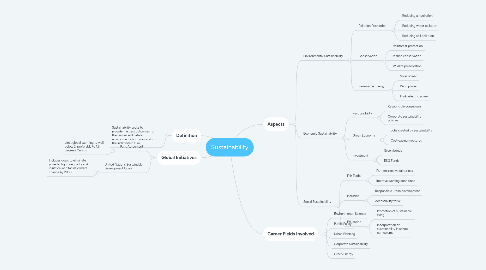
1. Definition
1.1. Sustainability seeks to provide the best outcomes for the human and natural environments both now and into the indefinite future.
2. Global Initiatives
2.1. Paris Agreement
2.1.1. Limit global warming to well below 2, preferably to 1.5 degrees Celsius
2.2. United Nations Sustainable Development Goals
2.2.1. Includes goals to eliminate poverty, fight inequality and injustice, and tackle climate change by 2030.
3. Aspects
3.1. Environmental Sustainability
3.1.1. Pollution Prevention
3.1.1.1. Reducing air pollution
3.1.1.2. Reducing water pollution
3.1.1.3. Reducing soil pollution
3.1.2. Conservation
3.1.2.1. Rainforest protection
3.1.2.2. Marine conservation
3.1.2.3. Wildlife preservation
3.1.3. Renewable Energy
3.1.3.1. Solar power
3.1.3.2. Wind power
3.1.3.3. Hydroelectric power
3.2. Economic Sustainability
3.2.1. Responsibility
3.2.1.1. Responsible consumerism
3.2.1.2. Corporate sustainability policies
3.2.2. Green Economy
3.2.2.1. Jobs created by sustainability
3.2.2.2. Cost-saving measures
3.2.3. Investment
3.2.3.1. Green bonds
3.2.3.2. ESG Funds
3.3. Social Sustainability
3.3.1. Fair Trade
3.3.1.1. Farmers receive fair prices
3.3.1.2. Improve working conditions
3.3.2. Inclusion
3.3.2.1. Responsible urban development
3.3.2.2. Accessibility for all
3.3.3. Education
3.3.3.1. Promotion of sustainable living
3.3.3.2. Incorporation of sustainability in school curriculums