


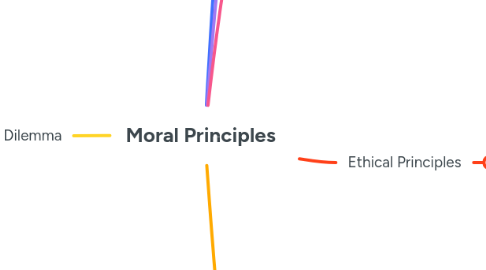
1. Erthical Dilemma
1.1. When an individual faces a choice between two morally right options, the decision depends on their ethical values.
2. Nature of Problems
2.1. Right vs. Wrong
2.1.1. Knowing what the right decision is yet we are tempted to choose the wrong decision; "moral temptation"
2.2. Wrong vs. Wrong
2.2.1. Both decisions are bad and should not be choosen
2.3. RIght vs. Right
2.3.1. A tough decision mainly based on your own values/beliefs yet both decisions can be considered good;"ethical dilemma"
3. Stakeholder
3.1. Anyone who can be affected by a dilemma
3.1.1. Family
3.1.2. Doctors/Nurses
3.1.3. Hospitals
4. Ethical Theories
4.1. Utilirianism
4.1.1. Maximize the benefit for the largest number of people.
4.2. Deontological
4.2.1. Personal intuition, values, and beliefs shape our actions.
4.3. Natural Law
4.3.1. Allow nature to follow its natural course without interference.
5. Ethical Principles
5.1. Autonomy
5.1.1. Everyone has the right to make decisions about their own life and body without coercion from others. This autonomy includes essential elements such as truth-telling, confidentiality, and informed consent, ensuring that individuals can choose freely and responsibly.
5.2. Benefience
5.2.1. Physicians have a moral obligation to provide assistance, ensuring that all choices are made with the intention of doing good and benefiting their patients. This responsibility involves carefully balancing potential benefits against associated risks.
5.3. Non-malefience
5.3.1. Physicians are required to adhere to the principle of "do no harm," meaning they must avoid actions that could be detrimental to their patients. This is a crucial aspect of balancing potential benefits with risks.
5.4. Justice
5.4.1. Fairness in treatment involves considering what is deserved and ensuring that all patients receive equitable care. It is essential that healthcare is administered without bias, providing each individual with the respect and attention they deserve.
6. Ethical Concepts
6.1. Consequetialism
6.1.1. The ethical value of an action is based on its consequences, evaluating whether the results are positive or negative
6.1.1.1. Action-based concept
6.2. Non-consequetialism
6.2.1. Considers more than just the outcomes—was the action taken with good intentions?
6.2.1.1. Action-based concept
6.3. Virtue
6.3.1. Focuses on the character of the individual performing the action rather than the action itself. Is the person acting with qualities such as justice, charity, mercy, or wisdom?
6.3.1.1. Agent-based concept
6.4. Casuistry
6.4.1. Draws on past cases to formulate moral principles relevant to the current situation.
6.4.1.1. Situation-base concept
6.5. Relativism
6.5.1. Influenced by factors such as time, place, circumstances, culture, and context.
6.5.1.1. Situation-based concept
6.6. Feminism
6.6.1. Morals center on caregiving and nurturing relationships, emphasizing the significance of connections and emotions.
6.6.1.1. Situation-based concept