

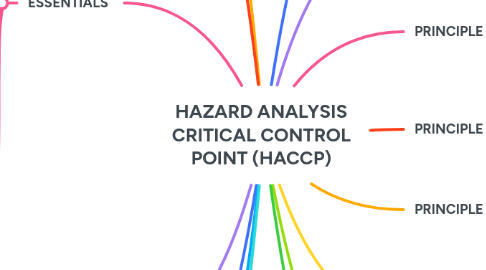
1. PRINCIPLE 6
1.1. Establish Establish procedures procedures for verification verification that the HACCP plan is working correctly
2. PRINCIPLE 7
2.1. Establish effective records keeping procedures that document the HACCP plan
3. ESSENTIALS
3.1. HACCP TEAM
3.1.1. A multi-disciplinary HACCP team shall be set up to develop, maintain and review the HACCP system.
3.2. EMPLOYEES EDUCATION & TRAINING
3.2.1. The establishment shall prepare training plan which will identify identify the need for training training which is essential for ensuring food safety and provide for the fulfillment of the need.
3.3. Management and maintenance of documentation
3.3.1. The establishment shall establish a documented HACCP system and shall a maintain the HACCP system and corresponding documentation
3.4. Management and maintenance of HACCP
3.4.1. The organisation shall establish, document and maintain a HACCP system to ensure that all known potential hazards within the field of application
3.5. HACCP auditing and validation
3.5.1. The organisation shall conduct internal audits at planned intervals to determine whether the HACCP system conforms to the planned arrangements
4. Hazard is the potential to cause harm to the consumers.
4.1. What is Critical Control Point? An operation or step by which control measures can be exercised that will eliminate, prevent, or control minimize a hazard
5. PRE-REQUISITE PROGRAMMES Establishment design and facilities
5.1. Location
5.2. Equipment
5.3. Facilities
6. transportation n distribution
6.1. general
6.2. requirements
7. product information n consumer awareness
7.1. labelling
7.2. consumer education
8. Establishment:
8.1. maintenance and sanitation
8.1.1. Pest control
8.1.2. Sanitation systems
8.2. personal hygiene
8.2.1. health status
8.2.2. illness n injuries