

1. induces LIVER to produce growth stimulants - INSULIN-LIKE GROWTH FACTORS (IGF-I) or SOMATOMEDINS (IGF-II). IGF-I prolongs action of GH. GH half like is 6-20 min. IGF-I half like is 20 hrs. Increases in protein synthesis, lipid metabolism, carb metabolism. Electrolyte balance. Bone growth. Secretion highest first 2 hrs of sleep. Can peak in response to vigorous exercise. also activated by GHRELIN, which is activated by empty stomach.
2. HYPOTHALAMUS-H2O balance, thermoregulation, sex drive, childbirth
2.1. 6 HORMONES RELEASE/INHIBIT ANTERIOR PITUITARY
2.1.1. TRH > TSH
2.1.2. CRH > ACTH
2.1.3. GnRH > FSH & LH
2.1.4. PIH/PRH > PRL
2.1.5. GHIH (somatostatin) > GH & TSH
2.1.6. INHIBIN > FSH
2.2. 2 HORMONES PRODUCED HERE BUT STORED AND RELEASED BY POSTERIOR PITUITARY
2.2.1. ADH (paraventricular nucleus)
2.2.2. Oxytocin (supraoptic nucleus)
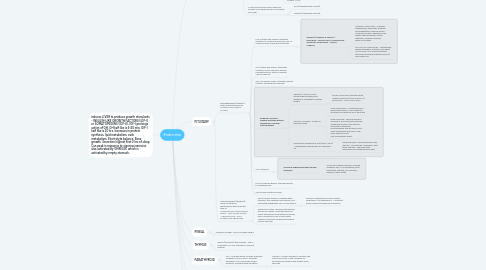
3. PITUITARY
3.1. Adenohypophysis (anterior) - linked to hypothalamus by HYPOPHYSEAL PORTAL SYSTEM
3.1.1. FSH to testes and ovaries- stimulates secretion of ovarian sex hormones, dev. of ovarian follicles, and sperm production
3.1.1.1. GONADS (OVARIES & TESTES) - EXOCRINE - WHOLE CELLS. ENDOCRINE - GONADAL HORMONES - MOSTLY STEROID
3.1.1.1.1. OVARIAN HORMONES - Estradiol, progesterone, and inhibit. Estradiol and Progesterone develop female reroductive system, physique, bone growth, regulate period, sustain pregnancy, prepare mammary gland for lactation
3.1.1.1.2. TESTICULAR HORMONES - testosterone, weaker androgens, estrogen, and inhibit. LEYDIG cells- lie in clusters between tubules and produce testosterone in b/t each sperm cell
3.1.2. LH to testes and ovaries- stimulates ovulation, corpus luteum to secrete PROGESTERONE, testes to secrete TESTOSTERONE
3.1.3. ACTH to adrenal cortex- stimulates adrenal cortex to secrete glucocorticoids
3.1.4. ADRENAL GLANDS- medulla adtropies without stimulation of cortisol- interdependent
3.1.4.1. ADRENAL MEDULLA-dual acting-endocrine gland and ganglion of sympathetic nervous system
3.1.4.1.1. CATECHOLAMINES (EPINEPHRINE, NOREPINEPHRINE) AND TRACES OF DOPAMINE - "FIGHT OR FLIGHT"
3.1.4.2. ADRENAL CORTEX- 3 layers of glandular tissue
3.1.4.2.1. Zona Glomerulosa - mineralcorticoids - electrolyte balance- ALDOSTERONE stimulates Na retention and K excretion
3.1.4.2.2. Zona Faciculata - glucocorticoids & androgens- glucocorticoids-glucose metabolism/cortisol stimulate fat and protein catabolism, gluconeogensis and release of fatty acids and glucose into blood. Help body adapt to stress. Anti-inflammatory effect
3.1.4.3. calcitonin by parafollicular cells (clear c cells) - released with rising blood Ca to decrease Ca
3.1.4.3.1. Zona Reticularis - glucocorticoids & sex steroids - Sex Steroids- androgens- sets libido. Estradiol- important after menopause for sustaining bone mass
3.1.5. TSH to thyroid-
3.1.5.1. THYROID-largest gland that is purely endocrine
3.1.5.1.1. T4 and T3 by thyroid follicles- increase metabolic rate, O2 consumption, heat production, appetite, GH secretion, alertness, reflex speed
3.1.6. PRL to mammary glands- mammary glands to synthesize milk
3.1.7. END to pain receptors in brain
3.2. Neurohypophysis (posterior) - nerve cell bodies in hypothalamus pass down the stalk as HYPOTHALMO-HYPOPHESEAL TRACT - NOT A TRUE GLAND - NERVE TISSUE - ONLY STORES AND RELSEASES
3.2.1. ADH to kidney tubules- increases water retention, thus reducing urine volume, and preventing dehydration AKA VASOPRESSIN
3.2.1.1. KIDNEYS-secrete RENIN that converts angiotensin 1 to angiotensin 2 > constricts blood vessels and raises blood pressure
3.2.2. Oxytocin to uterus- released during sexual arousal and orgasm, promotes feeling of sexual satisfaction and emotional bonding, labor contractions, flow of milk during lactation, emotional bonding b/t lactating mother and child
4. PINEAL
4.1. melatonin at night - role in circadian rhythm
5. THYMUS
5.1. shrinks (involution) after puberty - site of maturation of T cells important in immune defense
6. PARATHYROID
6.1. PTH - increases blood Ca levels. promotes synthesis of CALCITRIOL; increases absorption of Ca, decreases urinary excretion, increases bone resorption
6.1.1. KIDNEYS- convert calcidiol to calcitriol, the active form of vit. D and increases Ca absorption by intestine and inhibits loss in the urine