


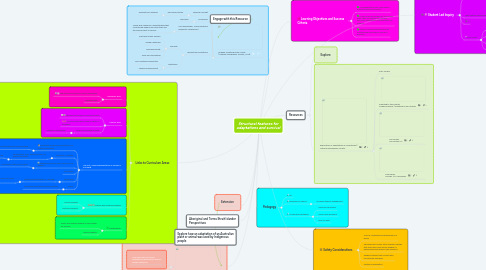
1. Aboriginal and Torres Strait Islander Perspectives
2. Engage: Adapting Down Under (National Geographic Society, 2018)
2.1. Develop concept
2.1.1. discussion starter
2.1.1.1. Wombat bum weapon
2.2. vocabulary
2.2.1. word wall
2.3. Prior knowledge, misconceptions diagnostic assessment
2.3.1. Scope and Sequence-understanding that living things depend on each other and the environment to survive
2.4. Benefits and limitations
2.4.1. Benefits
2.4.1.1. Australian native animals
2.4.1.2. closed captioned
2.4.1.3. Age appropriate
2.4.1.4. funny and fascinating
2.4.2. Limitations
2.4.2.1. Non-Australian presenters
2.4.2.2. Imperial measurement
3. Extension
4. Explore how an adaptation of an Australian plant or animal was used by Indigenous people
5. Honey Ant Adaptations
5.1. How can plant and animal adaptations help humans survive harsh conditions?
5.2. Traditional knowledge
6. Links to Curriculum Areas
6.1. Numeracy skills
6.1.1. Represent information in tables and graphs
6.1.2. Interpret data
6.2. Literacy skills
6.2.1. Interpret and analyse multimodal texts
6.2.2. Communicate ideas using a variety of strategies
6.2.3. Listen and respond to texts
6.2.3.1. Student collaboration
6.3. The Arts, varied representation of evidence including
6.3.1. annotated drawings characteristics of plants and animals
6.3.1.1. insight into thinking and understanding
6.3.1.1.1. formative assessment
6.3.2. sketches of habitat
6.3.2.1. Temperature, food and water sources, shelter, predators
6.3.2.1.1. indicates conceptual understanding
6.3.3. graphs identifying other animals in the habitat
6.3.3.1. interaction in the environment
6.3.4. 3D models
6.3.5. Media Arts
6.3.5.1. create representations of learning
6.3.5.1.1. choice for students with poor fine motor skills
6.3.6. Drama
6.3.6.1. Dramatise adaptations within a habitat
6.4. Critical and Creative Thinking
6.4.1. Human impacts
6.4.2. Historical impacts
6.5. Sustainability
6.5.1. Plants and animals depend on each other for survival
6.5.2. Human impacts
7. Engage with this Resource
8. Student Led Inquiry
8.1. brainstorm unique adaptations
8.1.1. marsupials
8.1.1.1. wombats
8.1.1.2. kangaroos
8.1.1.3. quolls
8.1.2. monotremes
8.1.2.1. platypus
8.1.2.2. echidna
8.2. table groups identify adaptations
8.2.1. notes and drawings
8.3. ?
8.4. KWL chart
8.4.1. plants and animals
8.4.2. habitats
8.4.3. Misconceptions
8.4.4. facts
9. Learning Objectives and Success Criteria
9.1. How adaptations help living things survive in their environment
9.2. Students will know they are successful when they can identify and visually represent adaptations and what they are used for.
9.3. Further concept understanding by investigating adaptations unique to Australia
10. Resources
10.1. Explore
10.2. Exploration of adaptations of living things | National Geographic Society
10.2.1. Artic Tundra
10.2.2. Adapting to the Atlantic Modern Explorer | Adapting to the Atlantic
10.2.3. Sea Turtles Sea Turtles 101
10.2.4. Polar Bears Animals 101: Polar Bears
11. Pedagogy
11.1. 5E
11.2. Emphasis on choice
11.2.1. Increase student engagement
11.3. Scaffolding strategies
11.3.1. Resources provided
11.3.2. Mixed-level grouping
11.3.3. Peer-to-peer