

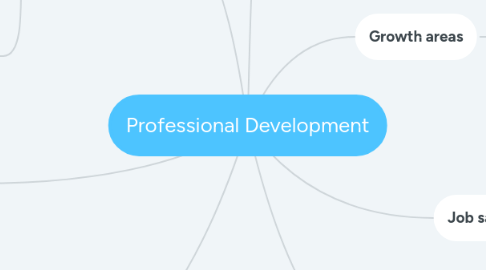
1. Imporantance
1.1. -Keep Pace
1.1.1. Workers' capabilities are up to current industry standards
1.2. -Level Up
1.2.1. Workers' knowledge& skills are enhanced to enable professional service delivery to customers, clients and the community
1.3. -Be Updated
1.3.1. Workers' knowledge stay relevant and up to date with the changing trends & directions in their profession & industry
1.4. -Add Value
1.4.1. Worker contribution become meaningful& more effective in the workplace/advances career, move to new positions
1.5. -Add Interest
1.5.1. Workers become open to new possibilities, new knowledge and new skill areas
2. Career Success
2.1. -Requires ongoing training and education.
2.2. -Professional development is designed to teach workers the skills needed to succeed in their respective line of work.
2.3. -Professional learning is more than just training, it's important for employers and employees alike to.
3. Ways to develop professinaly
3.1. COLLEGE STUDIES
3.1.1. -Degree programs -Diploma course
3.2. CONSULTATION
3.2.1. -Human resource managers -job search agents/sites
3.3. INDUSTRY CERTIFICATIONS
3.3.1. -TESDA, -government and private associations or companies
3.4. JOB TRAINING
3.4.1. -Practicum programs
3.5. MENTORING & COACHING
3.5.1. -Managers -Supervisors -instructors
3.6. ONLINE TRAINING PROGRAMS
3.6.1. -AHA -E-versity
4. Development paths
4.1. Career development
4.1.1. Professional Development
4.1.1.1. Personal Development
4.1.1.1.1. -SELF “Become a more capable PERSON”.
4.1.1.2. -INDUSTRY “Become a better CRAFTSMAN”.
4.1.2. -ORGANIZATION “Become a stronger LEADER”.
5. Benefits
5.1. For employees
5.1.1. For employers
5.1.1.1. -Promotes higher employee retention rates -Shows employer competency
5.1.2. -Boost employees confidence -Produce better workers -Open up new employee opportunities
6. Growth areas
6.1. PERSONAL
6.1.1. PROFESSIONAL
6.1.1.1. CAREER
6.1.1.1.1. -Be aware of business and industry trends -Help of mentors, leaders, colleagues, and manager
6.1.1.2. -Be aware of business and organizational trends -Help of mentors, managers, and colleagues CAREER
6.1.2. -Be self-aware -Help of family, friends, leaders, mentors and role models
7. Job satisfaction
7.1. What You Do
7.1.1. The industry, the company, the organization, the manager, and the job;
7.2. Who You Do It With
7.2.1. Co-workers, partners, customers, and mentors;
7.3. How You Do It
7.3.1. Technology, process, philosophy, organization culture.