


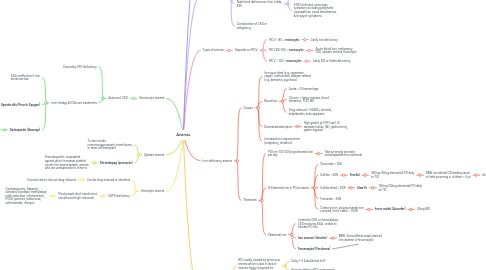
1. Normocytic anemia
1.1. Anemia of CKD
1.1.1. Caused by EPO deficiency
1.1.2. Iron-therapy & ESAs are treatments
1.1.2.1. ESAs ineffective if iron stores are low
1.1.2.2. Epoetin alfa (Procrit, Epogen)
1.1.2.2.1. If CKD: 3x/week when Hgb < 10 g/dL; reduce or interrupt when Hgb = 11
1.1.2.2.2. On chemo: start when Hgb < 10
1.1.2.2.3. BBW: :arrow_up: risk of death, MI, stroke, VTE, thrombosis; use lowest effective dose
1.1.2.3. Darbepoetin (Aranesp)
1.1.2.3.1. CKD: IV or SC QW (longer 1/2 life)
2. Aplastic anemia
2.1. Tx can include immunosuppressants, transfusions, or stem cell transplant
2.2. **Eltrombopag (promacta)**
2.2.1. thrombopoetin nonpeptide agonist which increases platelet counts (for severe aplastic anemia who are unresponsive to other tx
3. Hemolytic anemia
3.1. Can be drug-induced or inherited
3.1.1. Coombs test to rule out drug-induced
3.2. G6PD deficiency
3.2.1. Most people don't need tx but should avoid high-risk meds
3.2.1.1. Cephalosporins, Dapsone, isoniazid, levodopa, methyldopa, methylene blue, nitrofurantoin, PCNs, quinines, rasburicase, sulfonamides, rifampin
4. RBC Production
4.1. RBCs form in bone marrow where they take up Hgb & iron before being released as immature RBCs - **reticulocytes**
4.1.1. After 1-2 days, mature into **erythrocytes** which have a lifespan of **~120 days**
5. Causes of anemia
5.1. Impaired RBC production
5.2. Increased RBC destruction (hemolysis)
5.3. Blood loss
5.3.1. Decrease in Hgb or RBC volume results in :arrow_down: O2 carrying capacity
5.4. Nutritional deficiencies (iron, folate, B12)
5.4.1. If iron deficient, can cause glossitis, spooned nails, or pica
5.4.2. If B12 deficient, neurologic symptoms including peripheral neuropathies, visual disturbances, &/or psych symptoms
5.5. Complication of CKD or malignancy
6. Types of anemia
6.1. Depends on MCV
6.1.1. MCV < 80 = **microcytic**
6.1.1.1. Likely iron deficiency
6.1.2. MCV 80-100 = **normocytic**
6.1.2.1. Acute blood loss, malignancy, CKD, aplastic anemia, hemolysis
6.1.3. MCV > 100 = **macrocytic**
6.1.3.1. Likely B12 or folate deficiency
7. Iron-deficiency anemia
7.1. Causes
7.1.1. Iron-poor diets (e.g. vegetarian, vegan), malnutrition, disease-related (e.g. dementia, psychosis)
7.1.2. Blood loss
7.1.2.1. Acute = GI hemorrhage
7.1.2.2. Chronic = heavy menses, blood donations, PUD, IBD
7.1.2.3. Drug-induced = NSAIDs, steroids, antiplatelets, anticoagulants
7.1.3. Decreased absorption
7.1.3.1. High gastric pH (PPI use), GI diseases (celiac, IBD, gastrectomy, gastric bypass)
7.1.4. Increased iron requirements (pregnancy, lactation)
7.2. Treatment
7.2.1. PO Iron; 100-200mg elemental iron per day
7.2.1.1. Take on empty stomach; avoid/separate from antacids
7.2.2. % Elemental iron in PO products
7.2.2.1. Gluconate = 12%
7.2.2.2. Sulfate = 20%
7.2.2.2.1. **FeroSul**
7.2.2.3. Sulfate dried = 30%
7.2.2.3.1. **Slow Fe**
7.2.2.4. Fumarate = 33%
7.2.2.5. Carbonyl iron, polysaccharide iron complex, ferric maltol = 100%
7.2.2.5.1. **ferric maltol (Accrufer)**
7.2.3. Parenteral iron
7.2.3.1. Limited to CKD on hemodialysis, CKD receiving ESAs, unable to tolerate PO iron
7.2.3.2. **Iron sucrose (Venofer)**
7.2.3.2.1. BBW: Serious/fatal anaphylaxis w/ iron dextran or ferumoxytol
7.2.3.3. **Ferumoxytol (Feraheme)**
8. Macrocytic anemia
8.1. B12 usually caused by pernicious anemia which is due to lack of intrinsic factor (required for adequate B12 absorption
8.1.1. Dx by (+) AutoAb test to IF
8.1.2. Requires lifelong B12 replacement
8.2. Other causes include alcoholism, poor nutrition, GI disorders (Crohn's, celiac), & pregnancy
8.2.1. Also, long-term use of metformin, H2RAs, PPIs
8.3. Treatment
8.3.1. B12 injections considered 1st line
8.3.1.1. IM daily, weekly, or monthly depending on severity
8.3.2. **Nascobal**
8.3.2.1. 500mcg in one nostril QW
8.4. B12/folate interactions
8.4.1. Chloramphenicol can :arrow_down: efficacy of B12
8.4.2. Colchicine can :arrow_down: abs of B12