


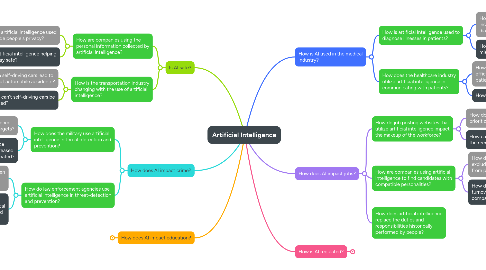
1. Is AI safe?
1.1. How are companies using the personal information collected by artificial intelligence?
1.1.1. How is artificial intelligence used to invade people's privacy?
1.1.2. How is artificial intelligence helping people stay safe?
1.2. How is the transportation industry changing with the use of artificial intelligence?
1.2.1. How can self-driving cars lead to the end of automobile accidents?
1.2.2. Why can't self-driving cars be trusted?
2. How does AI impact crime?
2.1. How does the military use artificial intelligence in threat-detection and prevention?
2.1.1. How has artificial intelligence inaccurately identified targets?
2.1.2. How has artificial intelligence improved accuracy and increased the number of threats eliminated?
2.2. How do law enforcement agencies use artificial intelligence in threat-detection and prevention?
2.2.1. How has artificial intelligence been used by law enforcement to unfairly target people of color?
2.2.2. How have law enforcement agencies been able to use artifical intelligence to prevent crime and keep people safer?
3. How does AI impact education?
3.1. How does artificial intelligence help educators personalize learning for students?
3.1.1. How can AI more effectively educate students than a traditional teacher?
3.1.2. What are the negative implications of losing the relationship aspect of teaching when relying too heavily on AI for teaching and learning?
3.2. How does artificial intelligence identify potential career training paths for secondary students?
3.2.1. What algorithmic biases are perpetuating stereotypes?
3.2.2. How can AI help break the chain of poverty by identifying students strengths?
3.3. Should AI authoring, creation, and editing tools be permitted for students to utilize for schoolwork?
3.3.1. Why should teachers teach students how to effectively use AI creation tools?
3.3.2. Why should schools block AI authoring tools?
4. How is AI used in the medical industry?
4.1. How is artificial intelligence used to diagnose illnesses in patients?
4.1.1. How does artificial intelligence increase efficiency and accuracy in diagnosing illnesses?
4.1.2. How does artificial intelligence misdiagnose patients?
4.2. How does the healthcare industry utilize artificial intelligence in communicating with patients?
4.2.1. How do AI chatbots increase efficiency in communicating with patients?
4.2.2. How are AI chatbots deceptive?
5. How does AI impact jobs?
5.1. How do job posting websites that utilize artificial intelligence impact the makeup of the workforce?
5.1.1. How do job search algorithms prioritize white, male candidates?
5.1.2. How can AI help eliminate bias in the recruitment process?
5.2. How are companies using artificial intelligence to find candidates with compatible personalities?
5.2.1. How do bias personality tests exclude marginalized communities from potential employment?
5.2.2. How do companies reduce turnover by hiring individuals with compatible personalities?
5.3. How does artificial intelligence replace the duties and responsibilities historically performed by people?
6. How is AI regulated?
6.1. In what ways does the EU regulate AI?
6.1.1. In what ways does the United States government regulate AI?
6.1.1.1. How can the government hold Big Tech companies accountable for the misinformation AI produces?
6.1.1.2. How is the lack of regulation helping Big Tech companies profit?
6.1.1.3. Why is the government allowing the sale of facial recognition data to foreign countries?
6.1.1.4. Leading/bias question