


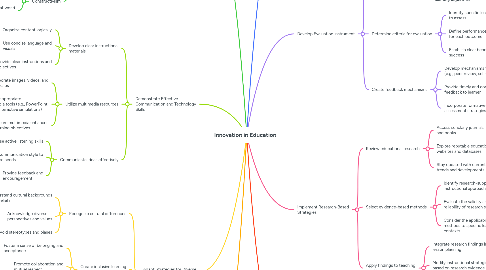
1. Apply Learning Theories
1.1. Study educational psychology
1.1.1. Explore key concepts in educational psychology
1.1.2. Understand how individuals
1.1.3. Analyze factors influencing learning processes
1.1.4. learn and develop
1.2. Understand different theories
1.2.1. Behaviorism
1.2.1.1. Pavlov's Classical Conditioning
1.2.1.2. Skinner's Operantant Conditioning
1.2.2. Cognitivism
1.2.2.1. Piaget's Cognitive Development Theory
1.2.2.2. Bruner's Constructivist Theory
1.2.3. Constructivism
1.2.3.1. Vygotsky's Social Development Theory
1.2.3.2. Dewey's Experiential Learning Theory
1.3. Apply theories to instructional design
1.3.1. Behaviorism
1.3.1.1. Use reinforcement and feedback in teaching
1.3.1.2. Design clear objectives and tasks
1.3.2. Cognitivism
1.3.2.1. Present information in meaningful ways
1.3.2.2. Encourage active engagement and reflection
1.3.3. Constructivism
1.3.3.1. Facilitate collaborative learning experiences
1.3.3.2. Provide authentic, real-world contexts for learning
2. Demonstrate Effective Communication and Technology Skills
2.1. Develop clear instructional materials
2.1.1. Organize content logically
2.1.2. Use concise language and visuals
2.1.3. Provide clear instructions and objectives
2.2. Utilize multimedia resources
2.2.1. Incorporate images, videos, and audio clips
2.2.2. Choose appropriate multimedia tools (e.g., PowerPoint, videos, interactive simulations)
2.2.3. Ensure multimedia enhances learning objectives
2.3. Communicate ideas effectively
2.3.1. Use active listening skills
2.3.2. Adapt communication style to audience needs
2.3.3. Provide feedback and encouragement
3. Adapt Strategies for Diverse Learners
3.1. Recognize cultural differences
3.1.1. Understand cultural backgrounds and beliefs
3.1.2. Acknowledge diverse perspectives and values
3.1.3. Avoid stereotypes and biases
3.2. Create inclusive learning environments
3.2.1. Foster a sense of belonging and acceptance
3.2.2. Promote collaboration and mutual respect
3.2.3. Incorporate diverse perspectives into curriculum and materials
3.3. Address individual needs
3.3.1. Identify individual learning styles and preferences
3.3.2. Provide personalized learning opportunities
3.3.3. Offer accommodations for students with special needs
4. Evaluate Emerging Strategies and Technologies
4.1. Stay updated with literature
4.1.1. Subscribe to relevant academic journals and publications
4.1.2. Follow reputable educational blogs and websites
4.1.3. Attend conferences and workshops on educational technology
4.2. Assess new instructional methods
4.2.1. Research emerging trends in teaching and learning
4.2.2. Experiment with innovative pedagogical approaches
4.2.3. Seek feedback from colleagues or experts in the field
4.3. Determine applicability and effectiveness
4.3.1. Analyze how emerging strategies align with learning objectives
4.3.2. Pilot test new methods in the classroom or training environment
4.3.3. Evaluate outcomes and gather student/trainee feedback
5. Describe Teaching Style
5.1. Reflect on personal teaching approaches
5.1.1. Consider teaching experiences
5.1.2. Analyze teaching methods
5.1.3. Reflect on interactions with students/trainees
5.2. Analyze strengths and weaknesses
5.2.1. Identify areas of effectiveness
5.2.2. Assess areas needing improvement
5.2.3. Solicit feedback from peers or supervisors
5.3. Identify preferred methods
5.3.1. Explore different pedagogical approaches
5.3.2. Determine which methods align with personal philosophy
5.3.3. Consider adaptability to diverse learners
6. Develop Evaluation Instrument
6.1. Design assessment tools
6.1.1. Select appropriate assessment methods (e.g., quizzes, essays, projects)
6.1.2. Create rubrics or grading criteria
6.1.3. Consider alignment with learning objectives
6.2. Determine criteria for evaluation
6.2.1. Identify specific learning outcomes to assess
6.2.2. Define performance indicators for each outcome
6.2.3. Establish clear benchmarks for success
6.3. Create feedback mechanisms
6.3.1. Develop mechanisms for ongoing feedback (e.g., peer review, self-assessment)
6.3.2. Provide timely and constructive feedback to learner
6.3.3. Incorporate formative assessment strategies
7. Implement Research-Based Strategies
7.1. Review educational research
7.1.1. Access scholarly journals, articles, and books
7.1.2. Explore reputable educational websites and databases
7.1.3. Stay updated with current research trends and developments
7.2. Select evidence-based methods
7.2.1. Identify research-supported instructional approaches
7.2.2. Evaluate the validity and reliability of research studies
7.2.3. Consider the applicability of methods to specific learning contexts
7.3. Apply findings to teaching practices
7.3.1. Integrate research findings into lesson planning
7.3.2. Modify instructional strategies based on research evidence
7.3.3. Monitor and assess the effectiveness of implemented methods
8. Identify Relevant Improvements
8.1. Analyze teaching experiences
8.1.1. Reflect on past teaching sessions
8.1.2. Review student feedback and performance data
8.1.3. Assess the effectiveness of instructional methods used
8.2. Identify areas for enhancement
8.2.1. Identify weaknesses or challenges encountered
8.2.2. Consider opportunities for innovation or optimization
8.2.3. Explore areas where student engagement or learning outcomes can be improved
8.3. Propose actionable improvements
8.3.1. Brainstorm potential solutions to identified issues
8.3.2. Develop specific improvement goals and objectives
8.3.3. Create an action plan with clear steps for implementation