


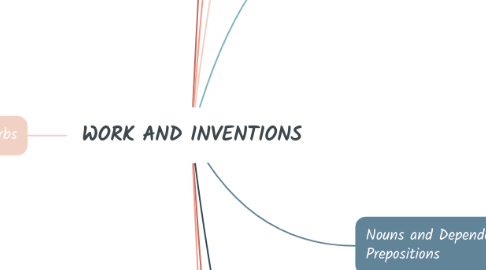
1. Additional Aspects:
1.1. Historical Inventions and their Impact
1.1.1. Impact:
1.1.1.1. How inventions changed people's lives and work.
1.1.2. Inventors' Biographies:
1.1.2.1. Thomas Edison, Nikola Tesla, Alexander Bell, Tim Berners-Lee.
1.1.3. Great Inventions:
1.1.3.1. Electricity, steam engine, telephone, internet.
1.2. Future of Work and Inventions
1.2.1. Impact:
1.2.1.1. How new technologies might change work processes and professions.
1.2.2. Future of Work:
1.2.2.1. Remote work, flexible schedules, digital nomads.
1.2.3. Future Technologies:
1.2.3.1. Artificial intelligence, robotics, blockchain.
1.3. Ethics of Work and Inventions
1.3.1. Ethics of Inventions:
1.3.1.1. Patents, intellectual property, inventors' responsibility.
1.3.2. Work Ethics:
1.3.2.1. Labor rights, fair working conditions, equality.
1.3.3. Impact:
1.3.3.1. Social and environmental consequences of inventions.
1.4. Collaboration and Teamwork
1.4.1. Teamwork:
1.4.1.1. Team roles, effective interaction, communication.
1.4.2. Inventions and Teamwork:
1.4.2.1. Examples of successful team projects (e.g., creating the iPhone).
1.4.3. Tips:
1.4.3.1. How to work effectively in a team, conflict resolution, idea sharing.
2. The World of Work
2.1. Professions and Job Titles
2.1.1. engineer, programmer, teacher, doctor, lawyer, manager, accountant, designer.
2.2. Work Environment
2.2.1. office, remote work, factory, construction site, research lab.
2.3. Work-Related Terms
2.3.1. Working Hours:
2.3.1.1. flexible schedule, full-time, part-time, shift work.
2.3.2. Salary:
2.3.2.1. wage, hourly pay, bonus, benefits.
2.3.3. Career Growth:
2.3.3.1. promotion, advancement, professional development, skill enhancement.
3. Reported Speech
3.1. Basic Rules of Reported Speech
3.1.1. Transforming direct speech into reported speech (changing pronouns, tense, time and place indicators).
3.2. Examples
3.2.1. Direct: "I will go to the office," she said. -> Reported: She said that she would go to the office.
3.3. Tense Shifts
3.3.1. Present Simple -> Past Simple
3.3.2. Future Simple -> Future in the Past
4. Urban Legends
4.1. Examples of Urban Legends
4.1.1. Legends about early inventions (e.g., Nikola Tesla's inventions).
4.1.2. Legends about strange work-related incidents.
4.2. Exercises
4.2.1. Listening to recordings of urban legends.
4.2.2. Comprehension questions.
4.3. Discussions
4.3.1. Debating what might be true and what is fiction.
5. Reporting Verbs
5.1. Key Verbs
5.1.1. say, tell, ask, advise, suggest, explain, promise.
5.2. Usage Examples
5.2.1. He said that he was tired. (say)
5.2.2. She told me to wait. (tell)
5.2.3. They asked if I could help. (ask)
5.3. Special Notes
5.3.1. Difference between tell and say (tell is used with an object, say is without an object).
6. Nouns and Dependent Prepositions
6.1. Nouns with Prepositions
6.1.1. interest in, reliance on, need for, demand for, responsibility for, effect on, influence on.
6.2. Common Combinations
6.2.1. I have a keen interest in technology.
6.2.2. There is a high demand for skilled workers.
6.3. Exercises
6.3.1. Filling in the blanks with correct prepositions.
6.3.2. Creating own sentences using these combinations.
7. Media Wars
7.1. Reading Topics
7.1.1. Articles about competition between companies for innovations.
7.1.2. Media influence on public opinion about working conditions and new inventions.
7.2. Analysis
7.2.1. Comparing viewpoints from different sources.
7.2.2. Critical thinking: analyzing the reliability of information presented in the media.
7.3. Discussion
7.3.1. Debating the role of media in promoting new technologies and their impact on jobs.
8. Presentation
8.1. Preparation Skills
8.1.1. Researching the topic.
8.1.2. Structuring information (introduction, main body, conclusion).
8.1.3. Using visual aids (slides, charts).
8.2. Presentation Topics
8.2.1. History of a great invention (e.g., the invention of the internet).
8.2.2. Impact of technology on jobs (automation, AI).
8.3. Tips
8.3.1. Practicing in front of an audience.
8.3.2. Preparing answers to potential questions.
9. A Story
9.1. Writing a Story
9.1.1. Creating a plot about a fictional invention or an unusual workday.
9.1.2. Including elements of conflict and resolution.
9.2. Structure
9.2.1. Introduction: introducing characters and situation.
9.2.2. Climax: main event or problem.
9.2.3. Resolution: solving the problem and conclusion.
9.3. Tips
9.3.1. Using descriptive elements to create atmosphere.
9.3.2. Developing dialogues and character traits.