
Distance Learning

Explore the comprehensive understanding of Distance Learning through our mindmap. This SEO-friendly description depicts the unique outline of distance learning, featuring its various benefits such as affordability, flexibility, and accessibility. It further navigates to its challenges including the need for discipline, self-motivation, and possible technical issues. Learn about the different types of distance learning available, from online courses to hybrid programs. Familiarize yourself wit...

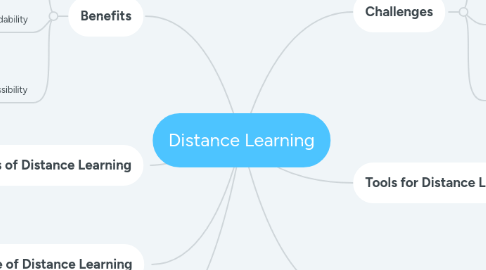
1. Benefits
1.1. Flexibility
1.1.1. Study at your own pace
1.1.2. Learning anytime, anywhere
1.1.3. Balance work and studies
1.2. Affordability
1.2.1. Reduces commuting cost
1.2.2. Reduces campus housing costs
1.3. Accessibility
1.3.1. Access to a wide range of courses
1.3.2. Opportunity for students in remote areas
2. Types of Distance Learning
2.1. Online Courses
2.1.1. Synchronous (real-time classes)
2.1.2. Asynchronous (self-paced)
2.2. Open Universities
2.3. Hybrid Programs
3. Future of Distance Learning
3.1. Wider acceptance of online degrees by employers
3.2. Advancements in AI and virtual reality can improve the learning experience
4. ```
5. Challenges
5.1. Lack of face-to-face interaction
5.1.1. Limited networking opportunities
5.1.2. May lead to feelings of isolation
5.2. Discipline and self-motivation
5.2.1. Easy to procrastinate
5.2.2. Requires strong time management skills
5.3. Technical issues
5.3.1. Dependence on a reliable internet connection
5.3.2. Need for up-to-date hardware and software
6. Tools for Distance Learning
6.1. E-learning Platforms
6.1.1. Zoom
6.1.2. Microsoft Teams
6.1.3. Google Classroom
6.2. Online Resources
6.2.1. Khan Academy
6.2.2. Coursera
6.2.3. Udemy