


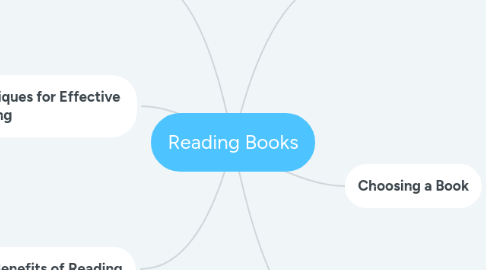
1. Reasons for Reading
1.1. Educational Purposes
1.1.1. Enhance knowledge
1.1.2. Improve language skills
1.2. Entertainment
1.2.1. Pass time leisurely
1.2.2. Experience different worlds
1.3. Personal Enlightenment
1.3.1. Strengthen worldview
1.3.2. Develop empathy
2. Techniques for Effective Reading
2.1. Skimming and Scanning
2.1.1. Quick overview
2.1.2. Locating specific info
2.2. Close Reading
2.2.1. Analyzing text in detail
2.2.2. Understanding deeper meaning
3. Benefits of Reading
3.1. Mental Stimulation
3.1.1. Enhances focus, brain connects different information
3.2. Vocabulary Expansion
3.2.1. Regular exposure to new words
3.3. Better Writing Skills
3.3.1. Understanding different writing styles
3.3.2. Applying learned structures to own writing
3.4. Stress Reduction
3.4.1. Immersion into different world
3.4.2. Slows heart rate, eases tension
4. Types of Books
4.1. Fiction
4.1.1. Novels
4.1.1.1. Historical
4.1.1.2. Mystery
4.1.1.3. Fantasy
4.1.1.4. Romance
4.1.2. Short Stories
4.2. Nonfiction
4.2.1. Biographies
4.2.2. History
4.2.3. Self-help
4.2.4. Science
5. Choosing a Book
5.1. Based on Reviews
5.1.1. Online reviews
5.1.2. Suggestions from friends
5.1.3. Bestseller lists
5.2. Matching interests
5.2.1. Favorite genres and themes
5.2.2. Recommended by a trusted source
5.3. Reading Samples
5.3.1. First few chapters
5.3.2. Synopsis at back or online
6. Joining Reading Communities
6.1. Book Clubs
6.1.1. Weekly or monthly meetings
6.1.2. Discuss books, exchange opinions
6.2. Online Forums
6.2.1. Participate in discussions
6.2.2. Share book recommendations.