
Professional Development Plan: Incorporating Coding in the Classroom

Professional Development Plan Layout for teachers that shows them how to incorporate coding in the classroom and why we should code in the classroom.

1. Session 1: Introduction to Coding & Computational Thinking
1.1. Learning Outcomes
1.1.1. Understanding the role of coding in education
1.1.2. Recognize computational thinking as a fundamental skill
1.2. Activites
1.2.1. Explore real-world examples of coding applications
1.2.2. Plan an unplugged coding game (e.g., algorithm design without a computer)
1.3. Assessment
1.3.1. Exit ticket reflection
2. Session 2: Coding Tools & Platforms
2.1. Learning Outcomes
2.1.1. Identify age-appropriate coding tools (Scratch, Blockly, Python, etc.)
2.1.2. Understanding the difference between block-based and text-based coding
2.2. Actvities
2.2.1. Hands-on exploration of different coding platforms
2.2.2. Group discussions on implementation ideas
2.3. Assessment
2.3.1. Teachers create a sample coding activity for their subject area
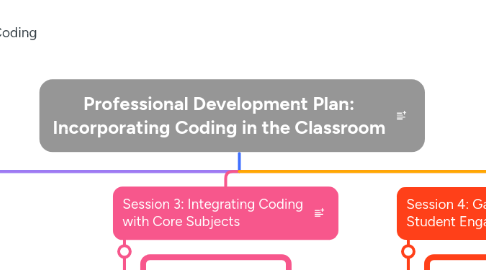
3. Session 3: Integrating Coding with Core Subjects
3.1. Learning Outcomes
3.1.1. Design lessons that incorporate coding into math, science, and literacy
3.1.2. Apply strategies for different learning styles (Visual, Auditory, Tactile, and the UDL framework)
3.2. Activities
3.2.1. Case study review (successful classroom integration)
3.2.2. Collaborative lesson planning
3.3. Assessment
3.3.1. Peer feedback on lesson drafts
4. Session 4: Gamification & Student Engagement
4.1. Learning Outcomes
4.1.1. Understanding gamification strategies using coding
4.1.2. Learn how digital game-based learning supports engagement
4.2. Actvities
4.2.1. Explore coding games (Code.org, Tynker, etc.)
4.2.2. Hands-on coding challenge (build a simple interactive game)
4.3. Assessment
4.3.1. Reflection on how gamification can enhance learning
5. Session 5: Assessing Coding Skills in the Classroom
5.1. Learning Outcomes
5.1.1. Learn different assessments methods for coding projects
5.1.2. Explore formative and summative assessment strategies
5.2. Activities
5.2.1. Analyze coding rubrics and assessment models
5.2.2. Design an assessment tool for a sample coding task
5.3. Assessment
5.3.1. Teachers create a rubric for assessing coding projects
6. Why Code in the Classroom?
6.1. The Importance of Coding in Education
6.1.1. Develops computational thinking and problem-solving skills
6.1.2. Encourages creativity and innovation
6.1.3. Prepares students for future careers in STEM
6.2. Research-Based Strategies
6.2.1. Darling-Hammond et al. (2017): Effective PD must be collaborative, job-embedded, and sustained
6.2.2. Desimone & Garet (2015): PD should include active learning and direct application
6.2.3. Rawat (2023): Coding should be differentiated for different learning styles
6.2.4. Shahira Popat et al. (2018): Coding fosters critical thinking and interdisciplinary learning
6.3. Alignment with ISTE Standards
6.3.1. ISTE-S (Students): Computational thinker, creative communicator
6.3.2. ISTE-E (Educators): Facilitator, designer
6.4. Equity & Accessibility in Coding Education
6.4.1. Strategies for diverse learners, IEPs, and ELL students