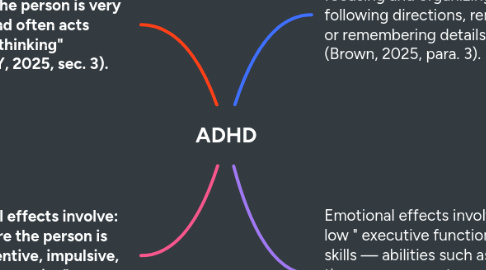
1. Cognitive effects involve: "where the person is very active and often acts without thinking" (NICHCY, 2025, sec. 3).
1.1. This exceptionality looks like: acting before thinking.
1.2. This exceptionality sounds like: having trouble playing quietly.
1.3. Accommodations may include - flexible seating or preferential seating near the teacher.
2. Social effects involve: "where the person is inattentive, impulsive, and too active" (NICHCY, 2025, sec. 3).
2.1. This exceptionality looks like: problems with paying attention.
2.2. This exceptionality sounds like: talking too much.
2.3. Accommodations may include - allowing breaks for movement.
3. Linguistic effects involve: "trouble focusing and organizing tasks, following directions, remaining on-task, or remembering details" (Brown, 2025, para. 3).
3.1. This exceptionality looks like: trouble listening when spoken to.
3.2. This exceptionality sounds like: energetic and restless.
3.3. Accommodations may include - "brain stories" where the student writes out his strengths and interests over the course of a year.
4. Emotional effects involve: low " executive function skills — abilities such as time management, judgment, organization, and emotional regulation" (Bertin, 2011, para. 4).
4.1. This exceptionality looks like: avoiding long mental tasks.
4.2. This exceptionality sounds like: losing one’s cool when frustrated.
4.3. Accommodations may include - "I Noticed" sheets that track little victories for the student.