Unlock the full potential of your projects.
Try MeisterTask for free.
Don't have an account?
Sign Up for Free
Cannot find specified map.
Browse
Featured Maps
Categories
Project Management
Business & Goals
Human Resources
Brainstorming & Analysis
Marketing & Content
Education & Notes
Entertainment
Life
Technology
Design
Summaries
Other
Languages
English
Deutsch
Français
Español
Português
Nederlands
Dansk
Русский
日本語
Italiano
简体中文
한국어
Other
Show full map
Copy and edit map
Copy
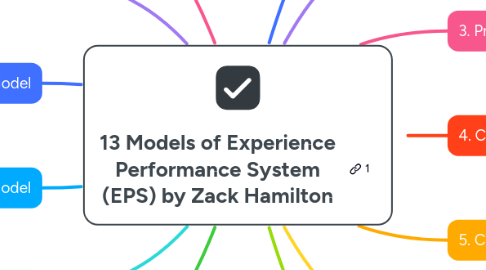
13 Models of Experience Performance System (EPS) by Zack Hamilton
Summaries
Toni Krasnic
Follow
Get Started.
It's Free
Sign up with Google
or
sign up
with your email address
Similar Mind Maps
Mind Map Outline
13 Models of Experience Performance System (EPS) by Zack Hamilton
by
Toni Krasnic
1. 8. Pod Model
1.1. Replaces CX governance with agile, outcome-driven journey pods that own experience delivery
2. 9. Scaling Model
2.1. Enables repeatability by codifying what works and distributing it across functions and journeys
3. 10. Influence Model
3.1. Builds CX power without authority, mapping org dynamics and driving alignment through trust and repetitions
4. 11. Feedback Loop Model
4.1. Closes the loop by integrating what worked (and didn't) back into the next spring cycle
5. 1. Signal Model
5.1. Captures real-time customer, behavioral, operation, and employee data
6. 13. Agentic Model
6.1. Frontier where human-led CX evolves into AI-augmented orchestration, guided by EPS
7. 12. Employee Signal Model
7.1. Connects frontline insight to system-level friction and peformance improvement
8. 2. Friction Model
8.1. Converts signal into prioritized business blockers tied to value levers like churn, conversions, and LTV
9. 3. Prioritization Model
9.1. Aligns friction to strategic KPIs, quantifies tradeoffs, and frames the cost of inaction
10. 4. Case Maker Model
10.1. Builds one-page business case that earns executive prioritization by tying CX to P&L impact
11. 5. Champion Model
11.1. Identifies, builds, and activates internal champions who drive momentum and influence decision-makers
12. 6. Close Plan Model
12.1. Applies sales discipline to internal execution; mapping milestones, blockers, and key approvers
13. 7. Momentun Model
13.1. Structures 30/60/90-day wins to prove vlaue fast and build trust across the organization
Get Started. It's free!
Connect with Google
or
Sign Up