2.1. The power to regulate interstate commerce was granted to Congress by the Commerce Clause of the United States Constitution.
3. Plessey v. Ferguson
4. Brown v. Board of Education
5. United States v. E.C. Knight and Co.
6. Debs v. United States
7. Schlechter Poultry Corporation v. United States
8. Marbury v. Madison
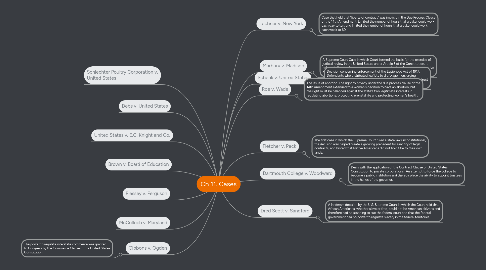
8.1. A Supreme Court Case in which Court formed the basis for the exercise of judicial review in the United States under Article 3 of the Constitution. It helped define the boundary between the constitutionally separate executive and judicial branches of the American form of Government.
9. Fletcher v. Peck
9.1. The first case in which the Supreme Court ruled a state law unconstitutional, the decision also helped create a growing precedent for sanctity of legal contracts, and hinted that Native Americans did not hold title to their own lands.
10. Dartmouth College v. Woodward
10.1. Deals with the application of the Contract Clause of United States Constitution to private corporations. An attempt to force the college to become a public institution and thereby place the ability to appoint trustees in the hands of the governor.
11. Dred Scott v. Sandford
11.1. A landmark decision by the U.S. Supreme Court in which the Court held that African Americans, whether slave or free, could not be American citizens and therefore had no standing to sue the federal court and that the federal government had no power to regulate slavery in the federal territories.
12. Lochner v. New York
12.1. Case that held that "liberty of contract" was implicit in the Due Process Clause of the 14th Amendment. Limited the number of hours that a baker could work each day to ten, and limited the number of hours that a baker could work each week to 60.
13. Schenk v. United States
13.1. Decision concerning enforcement of the Espionage Act of 1917. Defendants who distributed leaflets to draft-age men, urging resistance to induction, could be convicted of an attempt to obstruct the draft.
14. Roe v. Wade
14.1. The issue of abortion. The right to privacy under the due process clause of the 14th Amendment extended to a woman's decision to have an abortion, but the right must be balanced against the state's two legitimate interests in regulating abortions: protecting prenatal life and protecting women's health.