
Describe the steps one would take to prepare a risk assessment and a plan for safe work for someo...

ICE Written Exercise Group - SSOW and Risk Assessment

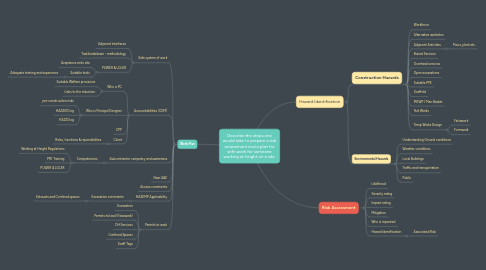
1. Work Plan
1.1. Safe system of work
1.1.1. Adjacent interfaces
1.1.2. Task breakdown - methodology
1.1.3. PUWER & LOLER
1.1.3.1. Aceptance onto site
1.1.3.2. Suitable tools
1.1.3.2.1. Adequate training and experience
1.2. Accountabilities (CDM)
1.2.1. Who is PC
1.2.1.1. Suitable Welfare provisions
1.2.1.2. Links to the induction
1.2.2. Who is Principal Designer
1.2.2.1. pre-construciton risks
1.2.2.2. HAZARD log
1.2.2.3. HAZID log
1.2.3. CPP
1.2.4. Client
1.2.4.1. Roles, functions & reponsibilities
1.3. Subcontractor competcy and awareness
1.3.1. Competencies
1.3.1.1. Working at Height Regulations
1.3.1.2. PPE Training
1.3.1.3. PUWER & LOLER
1.4. Near A&E
1.5. Access constraints
1.6. HASEMP Applicability
1.6.1. Excavation constraints
1.6.1.1. Exhausts and Confined spaces
1.7. Permits to work
1.7.1. Excavation
1.7.2. Permits to load (Falsework)
1.7.3. OH Services
1.7.4. Confined Spaces
1.7.5. Scaff Tags
2. Risk Assessment
2.1. Likelihood
2.2. Severity rating
2.3. Impact rating
2.4. Mitigation
2.5. Who is impacted
2.6. Hazard Identification
2.6.1. Associated Risk
3. Hazard Identification
3.1. Construction Hazards
3.1.1. Workforce
3.1.2. Alternative worksites
3.1.3. Adjacent Activities
3.1.3.1. Pours, plant etc.
3.1.4. Buried Services
3.1.5. Overhead services
3.1.6. Open excavations
3.1.7. Suitable PPE
3.1.8. Scaffold
3.1.9. MEWP / Man Basket
3.1.10. Hot Works
3.1.11. Temp Works Design
3.1.11.1. Falsework
3.1.11.2. Formwork
3.2. Environmental Hazards
3.2.1. Understanding Ground conditions
3.2.2. Weather conditions
3.2.3. Local Buildings
3.2.4. Traffic and transportation
3.2.5. Public