

What influences our Emotions?
저자: Gabriela Bendeck
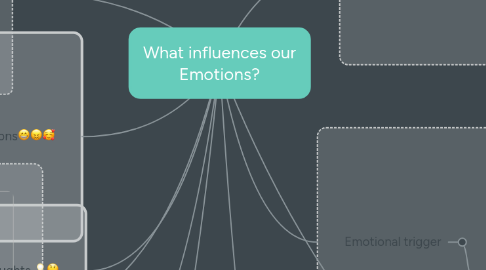
1. Physical Condition 🏃♀️🏃♂️💪
1.1. People with any chronic physical disease tend to feel more psychological distress than do healthy people. Poor physical health brings an increased risk of depression, as do the social and relationship problems that are very common among chronically ill patients.
2. Emotions😁😖🥰
2.1. a strong feeling deriving from one's circumstances, mood, or relationships with others.
2.2. The four most important brain chemicals that makes you feel emotions are serotonin, endorphins, oxytocin and dopamine.
3. Thoughts 💡🤔
3.1. Thought can refer to the ideas or arrangements of ideas that result from thinking, the act of producing thoughts, or the process of producing thoughts.
4. Relationship between emotions and thoughts
4.1. Thoughts and emotions have a profound effect on one another. Thoughts can trigger emotions (worrying about an upcoming job interview may cause fear) and also serve as an appraisal of that emotion (“this isn't a realistic fear”).
5. Brain
5.1. One of the key areas of your brain that deals with showing, recognising and controlling the body's reactions to emotions is known as the limbic system. The neurons in your hippocampus play a role in emotions.
6. Most helpful investigations
6.1. The brain basis of emotion: A meta-analytic review
6.1.1. This research can help me as a guide to understand the basis of emotions. It provides signifinant and well-connected information about some parts of brain that are the responsible to trigger emotions.
6.2. The Relevance of Language to the Study of Emotions
6.2.1. This article is more of a case study, which analyzes that the way we talk or the way we construct our sentences have an special way to be understood. In other words this article heps understand the way language trigger emotions.
6.3. What brain structures are active during emotions? Effects of brain stimulation elicited aversion on c-fos immunoreactivity and behavior
6.3.1. Helps me in closing knowledge gaps I might have until now. I'll gain more understanding about the brain, its chemical, and processes. Gives me insight of the behavior of the brain.