

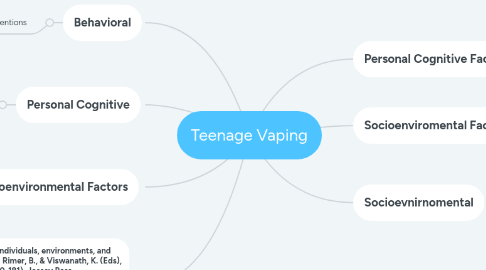
1. Behavioral
1.1. Intentions
1.1.1. The teen wants to stop and is in charge of their success. They are setting goals which fosters success as they see what the future would be, in this case health, not spending money on vaping supplies, and free of addiction (Glanz, 2015).
2. Personal Cognitive
2.1. Outcome Expectations
2.1.1. Knowing that by quitting they will not have the known health issues associated with vaping, the social stigma of vaping, and the pride of knowing they were able to beat this addiction.
3. Socioenvironmental Factors
3.1. Normative Beliefs
3.1.1. Teens believe that vaping is "cool" and accepted by their peers. This is a misconception that can be dispelled by knowledge, observational learning, and support from peers and those adults they hold in high regard.
4. References: Kelder. S., Hoelscher, D., & Perry, C. (2015). How individuals, environments, and health behaviors interact: Social cognitive theory. In Glanz. K., Rimer, B., & Viswanath, K. (Eds), Health behavior: Theory, research, and practice (5th ed., pp160-181). Jossey Bass.
5. Personal Cognitive Factor
5.1. Knowledge
5.1.1. Teenagers are given the facts about vaping and the long term consequences, where to find help with quitting, and resources on how to deal with factors associated with relapse.
6. Socioenviromental Factors
6.1. Social Support
6.1.1. Support groups, social persuasion - encouraged by someone they respect (Kelder et al, 2015).
7. Socioevnirnomental
7.1. Barriers
7.1.1. The barriers to quitting or to getting teens to not even start are significant. There is a sense that these are not as harmful as cigarettes, which is influenced by the media significantly. As mentors, teachers, parents we have to continue to educate on the truth of how detrimental they are.