


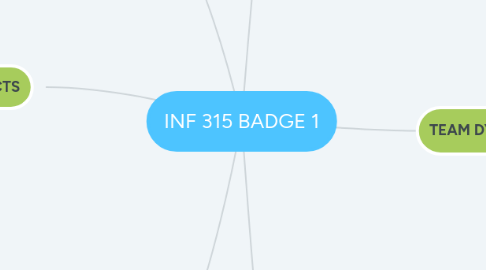
1. REMOTE TEAM FOCUS AREAS
1.1. effctive Structure
1.2. Lead from afar
1.3. Caring Culture
1.4. Routine
1.5. Supercharge Communication
1.6. Harnessing Technology
1.7. Security
2. SOFT SKILLS IN IT PROJECTS
2.1. Communication
2.2. Leadership
2.3. Motivation
2.4. Conflict Management
2.5. Adaptablility
2.6. Resourcefulness
2.7. Teamwork
2.8. Influence
3. LEADERSHIP THEORIES
3.1. Behavioral Theories
3.1.1. WHAT IT INTAILS
3.1.1.1. focus on how leaders behave
3.2. Contingency Theories
3.2.1. Hersey and Blanchard’s Situational Leadership Theory
3.2.2. Fiedler’s contingency model
3.2.3. WHAT IT INTAILS
3.2.3.1. A leader's effectiveness is contingent upon with how his leadership style matches the situation
3.3. Trait Theories
3.3.1. WHAT IT INTAILS
3.3.1.1. Behavioral Characteristics that are common in leader
3.4. Power and Influence Theories
3.4.1. WHAT IT INTAILS
3.4.1.1. focuses on how leaders can motivate their team by using (surprise, surprise) their power and/or influence
3.4.2. John French and Bertram Raven’s 5 forms of power:
3.4.2.1. Legitimate
3.4.2.2. Reward
3.4.2.3. Expert
3.4.2.4. Referent
3.4.2.5. Coercive
4. ROLES IN A TEAM
4.1. Plant
4.2. Resource Investigator
4.3. Co-Ordinator
4.4. Shaper
4.5. Monitor Evaluation
4.6. Teamworker
4.7. Implementer
4.8. Completer finisher
4.9. Specialist
5. TEAM DYNAMICS
5.1. WHAT IT IS
5.1.1. Unconscious, psychological forces that influence the direction of a team's behavior and performance.
5.2. GOOD
5.2.1. Improving Performance
5.2.2. Improving Goals
5.2.3. Brings best out of team members
5.3. BAD
5.3.1. Unproductive Conflict
5.3.2. Demotivation
5.3.3. Prevent Goal to be achieved
5.4. Psychological Models
5.4.1. Lewin’s Group dynamics
5.4.1.1. Convergence
5.4.1.2. Cohesion
5.4.1.3. Conformity
5.4.2. FIRO/Human Elements Model
5.4.2.1. Behavior
5.4.2.1.1. Inclusion
5.4.2.1.2. Control
5.4.2.1.3. Openness
5.4.2.2. Feelings
5.4.2.2.1. Significance
5.4.2.2.2. Competence
5.4.2.2.3. Likeability
5.4.2.3. Self-Concept
5.4.2.3.1. Aliveness
5.4.2.3.2. Self-Determination
5.4.2.3.3. Self-Awareness
5.4.3. The Tuckman Model
5.4.3.1. Forming
5.4.3.2. Storming
5.4.3.3. Norming
5.4.3.4. Performing
5.4.3.5. Adjourning
5.4.4. Personality Type Theories
5.4.4.1. Myer Briggs
5.4.4.2. DISC
5.4.4.3. Herrmann Brain Dominance
5.5. Non-Psychological Models
5.5.1. Hofstede Cultural Dimensions
5.5.2. Methodologies
5.5.3. Organizational Structure
5.5.4. Stakeholder Models
5.6. Strategies To Improve
5.6.1. Diagnosis of the problem in the team dynamic
5.6.2. Investigate current team dynamics
5.6.3. Identify type of intervention that will have the right impact
6. LEADERSHIP SKILLS
6.1. Key Skills Needed
6.1.1. Patience
6.1.2. Empathy
6.1.3. Active Listening
6.1.4. Reliability
6.1.5. Dependability
6.1.6. Creativity
6.1.7. Positivity
6.1.8. Effective feedback
6.1.9. Timely communication
6.1.10. Team building
6.1.11. Flexibility
6.1.12. Risk-taking
6.1.13. Ability to teach and mentor