


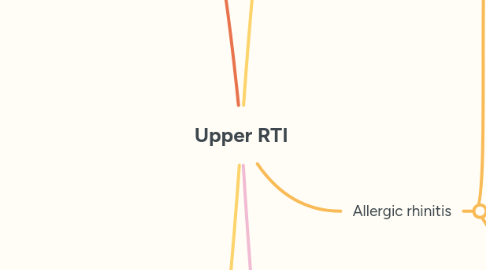
1. bacterial sinusitis
1.1. Treatment
1.1.1. Amoxycillin
1.1.1.1. MOA: inhibit bacterial transpeptidases=inhibit cell wall synthesis
1.1.1.2. ADRs
1.1.1.2.1. diarrhoea
1.1.1.2.2. hypersensitivity
1.1.1.2.3. super-infection
1.1.1.3. precautions
1.1.1.3.1. renal excretion: reduce dose if renal failure
1.1.1.3.2. cross-reactivity between penicillins, cephalosporins, carbapenms
1.1.2. b-lactamase inhibitors
1.1.2.1. drugs
1.1.2.1.1. Clavulanic acid
1.1.2.1.2. Sulbactam
1.1.2.1.3. Tazobactam
1.1.2.2. MOA: inhibit B-lactamase produced by bacteria. NO antimicrobial action
1.1.2.3. Combinations
1.1.2.3.1. Clavulanic acid+Amoxycillin
1.1.2.3.2. Sulbactam+Ampicillin
1.1.2.3.3. Tazobactam+Piperacillin
1.1.3. Cephalosporins
1.1.3.1. drugs
1.1.3.1.1. 1st generation: Cephalexin
1.1.3.1.2. 2nd generation: Cefaclor
1.1.3.1.3. 3rd generation: Ceftazidime
1.1.3.2. MOA: inhibit transpeptidases
1.1.3.3. ADRs
1.1.3.3.1. N,V,D
1.1.3.3.2. hypersensitivity reactions
2. safe in pregnancy and breast-feeding
3. Pharyngitis/Tonsillitis
3.1. cause
3.1.1. viral
3.1.1.1. self resolving
3.1.2. bacterial
3.1.2.1. treatment
3.1.2.1.1. Amoxycillin
3.1.2.1.2. clindamycin
3.1.2.1.3. Macrolide
4. drug of choice: Amoxycillin+Clavulanic adic
5. first line treatment
6. penicillin-sensitive patients
7. Acute rhinitis (common cold)
7.1. Cause viral or allergic
7.2. Treatment
7.2.1. Paracetamol or NSAIDs
7.2.2. Nasal decongestants (a1 agonists)
7.2.2.1. drugs
7.2.2.1.1. Phenylephrine (short acting)
7.2.2.1.2. Oxymetazoline (long acting)
7.2.2.2. MOA: Constrict dialted arterioles in nasal mucosa
7.2.2.3. Cautions
7.2.2.3.1. patients with hypertension
7.2.2.3.2. should not be used more than 3 days due to risk of (rhinitis medicamentosa)
8. Allergic rhinitis
8.1. Cause: inhalation of allergen
8.2. treatment
8.2.1. Anti-histamine
8.2.1.1. Drugs
8.2.1.1.1. 1st generation: Diphenhydramine Chlorpheneramine
8.2.1.1.2. 2nd generation Cetrizine Loratidine
8.2.1.2. MOA: antagonise H1 receptors
8.2.1.3. ADRs
8.2.1.3.1. sedation
8.2.1.3.2. excitation
8.2.1.3.3. Anti-muscarinic affect
8.2.1.4. cautions
8.2.1.4.1. benign prostatic hypertrophy
8.2.1.4.2. urinary retention
8.2.1.4.3. glaucoma
8.2.2. Topical intranasal anti-histamine
8.2.2.1. Azelastine
8.2.3. Intranasal corticosteroids
8.2.3.1. Drugs
8.2.3.1.1. Beclomethasone
8.2.3.1.2. Budesonide
8.2.3.2. caution: avoid deep inhalation to minimize systemic effects
9. less in 2nd generation
10. more lipid soluble--> can cross BBB, short acting
11. Rhinosinusitis
11.1. Cause: viral or allergic
11.2. treatment
11.2.1. Paracetamol or NSAIDs
11.2.2. Nasal decongestants (a1 agonists)
11.2.3. Nasal drops
11.2.3.1. budesonide
11.2.3.2. fluticasone