

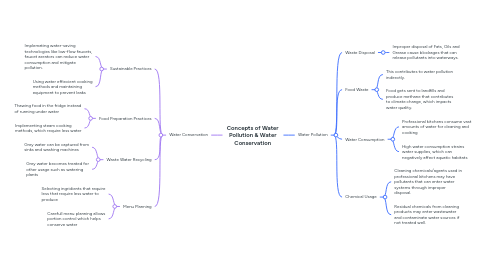
1. Water Conservation
1.1. Sustainable Practices
1.1.1. Implemating water-saving technologies like low-flow faucets, faucet aerators can reduce water consumption and mitigate pollution.
1.1.2. Using water effiecient cooking methods and maintaining equipment to prevent leaks
1.2. Food Preparation Practices
1.2.1. Thawing food in the fridge instead of running under water
1.2.2. Implementing steam cooking methods, which require less water
1.3. Waste Water Recycling
1.3.1. Grey water can be captured from sinks and washing machines
1.3.2. Grey water becomes treated for other usage such as watering plants
1.4. Menu Planning
1.4.1. Selecting ingridients that require less that require less water to produce
1.4.2. Carefull menu planning allows portion control which helps conserve water
2. Water Pollution
2.1. Waste Disposal
2.1.1. Improper disposal of Fats, Oils and Grease cause blockages that can release pollutants into waterways.
2.2. Food Waste
2.2.1. This contributes to water pollution indirectly.
2.2.2. Food gets sent to landfills and produce methane that contributes to climate change, which impacts water quality.
2.3. Water Consumption
2.3.1. Professional kitchens consume vast amounts of water for cleaning and cooking
2.3.2. High water consumption strains water supplies, which can negatively affect aquatic habitats
2.4. Chemical Usage
2.4.1. Cleaning chemicals/agents used in professional kitchens may have pollutants that can enter water systems through improper disposal.
2.4.2. Residual chemicals from cleaning products may enter wastewater and contaminate water sources if not treated well.