

1. Gas Exchange: Bronchitis or Emphysema
1.1. Patho: Irritants causing inflammation and increase mucus production
1.1.1. Narrowing of the airways
1.1.1.1. Increase SOB
1.1.1.1.1. Med: Advair Discus (Bronchodilator)
1.1.1.2. Difficulty breathing
1.1.1.2.1. Admission POX: 76% RA
1.1.1.2.2. Admission RR: 38 breaths/min
1.1.1.3. Prone to infection
1.1.1.3.1. Day 2: MRSA positive
1.1.1.4. Worsening productive cough of think pink mucus
1.1.1.5. Altered gas exchange
1.1.1.5.1. Admission ABG Results **PaCO2 -** 52 mmHg (high) **pH** 7.31(acidic) **PaO2** 64 mmHg (low) **PaHCO3** 19 mEq/L (low)
1.2. Admission Day: Intubated and Vented
1.2.1. Med: Dexmedetomidine Drip (sedation during intubation procedure)
1.2.1.1. Day 2 - Meds: Dexmedetomidine drip discontinued; Midazolam (PRN sedative); Hydromorphone (PRN pain management)
1.2.1.1.1. Day 3 - CXR - 15% pneumothorax in apex of right lung
1.3. Prone to infection - Pneumonia (2008, 2018)
1.4. Past Med Hx: Tracheostomy for vent management when Jessie had Bronchitis with Pneumonia (2018)
1.5. 38 pack/yr hx of smoking
2. Perfusion: DVT
2.1. Causes: sedentary due to bed rest, increase suseptability to blood clots, precense of PAD
2.1.1. Blood flow in veins slow down/blocked
2.1.1.1. Edema of lower extremities
2.1.1.2. Redness of extremity
2.1.1.3. Day 7: Client complained of right leg pain; Venous doppler result's DVT at the popliteal vessel
2.1.1.3.1. Med: Weight-based heparin drip started
2.1.2. Admission Med: Heparin Drip (DVT prophylaxis)
2.1.2.1. Day 4: Heparin discontined SubQ heparin daily (DVT prophylaxis) **PT/INR **- 15 sec/1.2 (low)
2.1.2.1.1. Day 6: Warfarin **PT/INR** - 14 sec/1.4 (low)
2.1.3. Med: Clopidogrel (anti-platelet)
2.1.3.1. **Low platelet count ** Admission: 141 mm^3 Day 2: 133 mm^3 Day 4: 114 mm^3 Day 6: 128 mm^3 Day 10: 142mm^3
2.1.3.2. High PTT
2.2. Past Med Hx: DVT (2008,2018)
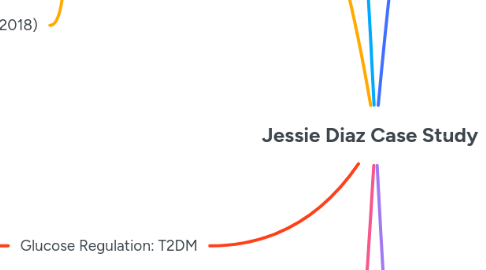
3. Glucose Regulation: T2DM
3.1. Patho: obesity; insulin insensitivity
3.1.1. Increase blood sugar **Blood Glucose Levels** Admission: 235 mg/dl Day 2: 198
3.1.1.1. increase inflammation, thicker blood
3.1.1.1.1. Treatment Plan for T2DM
4. Perfusion: HF/PE/AFib
4.1. Low Hbg, Hct
4.1.1. Increase plasma volume, decrease RBC count due to bone marrow depression and understimulated erythropoietin to create new RBC
4.2. Perfusion: Hyperlipidemia
4.2.1. Plaque deposits, Elevated total cholesterol & LDL, Low HDL **Total Cholesterol** Day 2: 230 mg/dl Day 10: 218 mg/dl **LDL** Day 2: 196 mg/dl Day 10: 186 mg/dl **HDL** Day 2: 44 mg/dl Day 10: 45 mg/dl
4.2.1.1. Med: Atorvastatin (lower cholesterol)
4.2.1.2. Atherosclerosis of vessels
4.2.1.2.1. Sustained vessel damage
4.2.1.2.2. Narrowing of vessels
5. Medication Reconciliation
5.1. Before Admission
5.1.1. Empagliflozin
5.1.1.1. 1: Stops the kidneys from reabsorbing sugar back into the body, which means the body excretes more sugar through the urine
5.1.1.2. 2: Side effects include nausea, UTI, increased urinatination. Important to monitor blood glucose during therapy.
5.1.2. Sitagliptin/metformin
5.1.2.1. 1: Reduce glucose absorption in GI tract and enhance insulin sensitivity
5.1.2.2. 2: Must consume with food to prevent GI upset
5.1.3. Valsartan
5.1.3.1. 1: Helps to lower blood pressure
5.1.3.2. 2: Report signs of angioedema or allergic reaction (swelling of the face, lips, tongue, or throat; trouble breathing)
5.1.4. Clopidogrel
5.1.4.1. 1: Anti-platelet to reduce the risk of MI and stroke
5.1.4.2. 2: Monitor for abd pain and other GI bleeding signs (ex: black tarry stool)
5.1.5. Atorvastatin
5.1.5.1. 1: Decrease cholesterol production in liver
5.1.5.2. 2: Adminster at bedtime
5.1.6. Advair Discus
5.1.6.1. 1: Relaxes the airways so that work of breathing is easier
5.1.6.2. 2: Rinse mouth after inhalation to prevent oral candidiasis. Report adverse reactions such as palpitations, chest pain, rapid HR, or tremors
5.2. During Hospital Stay
5.2.1. Insulin Sliding Scale and Lantus
5.2.1.1. 1: To lower high blood glucose levels
5.2.1.2. 2: Monitor blood glucose levels; report signs of dizziness, confusion, shkaing or fast heart rate
5.2.2. Furosemide
5.2.2.1. 1: Helps to decrease edema because there is too much fluid onboard
5.2.2.2. 2: Urination frequency will increase; report adverse reactions such as ringing in ears, abdominal pain, and fever - these may indicate signs of toxicity
5.2.3. Amiodarone
5.2.3.1. 1: Used to prevent arrythmias or abnormal heart rhythms
5.2.3.2. 2: report signs of weakness, numbness, weight change, rash, or muscosal lesions. Do not stpo taking medication without consulting your phsyician
5.2.4. Heparin Drip
5.2.4.1. 1: Prevents clotting of blood and formation of fibrin in the clotting cascade
5.2.4.2. 2: Obtain CBC, PT/INR, aPTT, assess for bleeding risk
5.2.5. Dexmedetomidine
5.2.5.1. 1: Induce a state of unconsciousness while patient stays rousable and cooperative
5.2.5.2. 2: Assess for adverse reactions every 4 hours (allergic reaction, bradycardia, hypotension, seizure)
5.2.6. Midazolam
5.2.6.1. 1: Muscle relaxer
5.2.6.2. 2: Have oxygen and suction ready at bedside in cause of severe respiratory depression
5.2.7. Hydromorphone
5.2.7.1. 1: Pain Management for short term severe pain relief
5.2.7.2. 2: Causes decrease in sympathetic nervous system > decrease HR, BP and RR
5.3. Additional Discharge Medication
5.3.1. Warfarin
5.3.1.1. 1: Prevents new clot formation
5.3.1.2. 2: Complete Weekly INRs (On anti-coagulant therapy INRs should be 2.0-3.0)
6. Care Plan Interventions 24-36 hours prior to discharge
6.1. Untreated for MRSA positive
6.1.1. Consult physician for ABX treatment for MRSA
6.2. Advancing Diet
6.2.1. Have patient upright when tube feeding is running
6.2.2. Conducting a swallow test to access risk for aspiration and whether to advance diet
6.2.3. Consult with physician about advancing diet prior to discharge
6.3. Heparin
6.3.1. Montior signs for bleeding, rash
6.3.2. Monitor PT/INR to ensure therapeautic levels
6.4. Teaching
6.4.1. Glucose Monitoring
6.4.1.1. Monitor signs of hypo and hyperglycemia
6.4.1.2. Nutrition
6.4.1.2.1. Diabetic Diet
6.4.2. Warfarin
6.4.2.1. Monitoring signs for bleeding
6.4.2.2. Complete weekly INR (INR should be 2.0-3.0)
6.4.3. Smoking
6.4.3.1. Smoking cessation
6.4.3.2. Worsen bronchitis symptoms
6.4.3.3. Increase HTN
6.4.4. Weight gain
6.4.4.1. Signs of worsening HF
6.4.4.2. Obtain daily weight
6.4.4.3. Monitor signs of edema
6.4.5. Movement
6.4.5.1. Prevent future DVT formation
6.4.5.2. Increases perfusion to extremeities
6.4.5.3. Prevent bed sores and pressure ulcers
6.4.6. Chest Tube Removal Care
6.4.6.1. Monitoring of chest tube site for redness, infection, pus