


ASD successful inclusion in general education
저자: Amira Abd-Elaziz
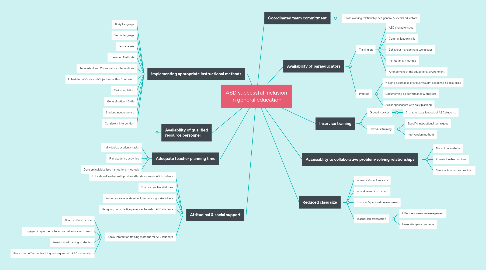
1. Availability of qualified resource personnel
1.1. Teachers who are willing to accept ASD students
1.2. Social worjers
1.3. Psychologists
1.4. Speech & language pathologists
1.5. Special educators
1.6. Occupational & physical therapists
1.7. Counselors
2. Implementing appropriate instructional methods
2.1. Body Language
2.2. Verbal language
2.3. Task analysis
2.4. Transition Methods
2.5. Antecedent and Consequence Interventions
2.6. Imbedding of Goals and Objectives within Curriculum
2.7. Task completion
2.8. Generalisation if Skills
2.9. Student Independence
2.10. Consistent Intervention
3. Adequate teacher planning time
3.1. Individualize academic tasks
3.2. Plan academic activities
3.3. Develop individualized instructional methods
4. Attitudinal & social support
4.1. Educational leaders with positive attitudes towards ASD students
4.2. Positive teacher attitudes
4.3. Raising awareness about inclusion among stakeholders
4.4. Designing curricula & experiences to match ASD students
4.5. Social interaction training methods for ASD students
4.5.1. Direct skill instruction
4.5.2. Engaging in specified interactive behaviour with peers
4.5.3. Peer-intiated training strategies
4.5.4. Peers using effective teaching techniques with ASD classmates
5. Inservice training
5.1. Group insevices
5.1.1. Characteristics & needs of ASD students
5.2. Individual training
5.2.1. Specific instructional techniques
5.2.2. Intervention methods
6. Accessiblity to collaborative problem-solving relationships
6.1. Nonschool systems
6.2. Knowledgeable teachers
6.3. Services & expertise provided
7. Availability of paraeducators
7.1. Training on
7.1.1. ASD characteristics
7.1.2. Communication skills
7.1.3. Behaviour management techniques
7.1.4. Instructional methods
7.1.5. Arrangement of the educational environment
7.2. Practice
7.2.1. Helping Ss practise previously taught academic & social skills
7.2.2. Documenting Ss performance & progress
7.2.3. Assisting teachers with daily planning
8. Reduced class size
8.1. Increase student success
8.2. Individualized instruction
8.3. Ss social & personal development
8.4. Teacher job satisfaction
8.4.1. Effective classroom management
8.4.2. Fewer discipline problems