

Physiology and the Environment
저자: Steven Roberts
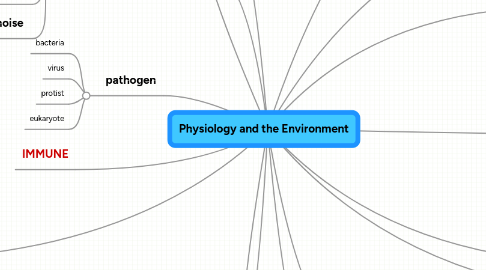
1. pathogen
1.1. bacteria
1.2. virus
1.3. protist
1.4. eukaryote
2. PHYSICAL STRESS
3. IMMUNE
4. Life Happens
4.1. starvation
4.2. community
4.3. mating
4.4. finding mates
4.5. senescence
5. Fishing and Aquaculture
5.1. nets
5.2. crowding
5.3. handling
5.4. physical stress
5.5. noise
6. GROWTH
7. GENERAL STRESS
8. LAB
8.1. Extended
8.1.1. Assay
8.1.1.1. Gene Expression
8.1.1.1.1. general
8.1.1.1.2. specific
8.1.1.2. Protein
8.1.1.3. Hormone?
8.1.1.3.1. responsible enzyme
8.1.1.4. Behavior
8.1.2. Animal
8.1.2.1. Bacteria
8.1.2.2. Shellfish
8.1.2.2.1. gill
8.1.2.2.2. hemocytes
8.1.2.3. Fish
8.1.2.3.1. brain
8.1.2.3.2. liver
8.1.2.3.3. gill
8.1.2.3.4. blood
8.1.3. Stress
8.1.3.1. Temperature
8.1.3.2. pH
8.1.3.3. Oxygen
8.1.3.4. Density
8.1.3.5. Challenge
8.1.3.6. Host tissue (pathogen)
8.1.3.7. predators
8.2. 1 day
8.2.1. oyster spin
8.2.2. histology
8.2.2.1. New node