


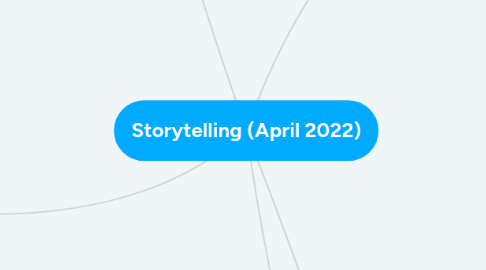
1. 1. Science: Stories have Structure
1.1. Objectives
1.1.1. Be able to organize a timeline of events in the story
1.1.2. Be able to retell a story
1.1.3. Be able to tell a story with the beginning, middle, and end
1.2. Activities
1.2.1. Picture Puzzle of the events that happened in a story and having them put it in a timeline of the order of events
1.2.2. Sequencing of stories (Color, Cut, Paste Activity)
1.2.3. Creating stories by filling in categories of "Beginning, Middle, and End"
1.2.4. Reading a story all together in a group and discussing the events that happened in the story
1.2.5. Exploring different versions of stories
1.3. Assessment
1.3.1. Creating a structure of a story as a class, and putting in the events that happened in the story in the correct place
1.3.2. Discussions
1.3.3. Creating a Story
2. 2. History: Traditional to Modern Storytelling
2.1. Objectives
2.1.1. Recognize that stories can be told in more than one way
2.1.2. Tell a story in more than one way
2.1.3. Recognize the change in how we enjoy art a long time ago versus now (eg. Now we have videos, before we did not.)
2.2. Activities
2.2.1. Sharing Stories from Home (book, video) from home
2.2.2. Keeping a record of their learning for portfolios physically and digitally (photos, videos, quotes)
2.2.3. Exploring various versions of the same stories
2.3. Assessment
2.3.1. Discussions as a class and one to one: "What are the different ways we tell stories?"
3. 3. Culture: Stories Can Come from Different Cultures
3.1. Objectives
3.1.1. Learn about few of the traditional stories from different places and cultures
3.1.2. Know where their peers are from and what kind of culture they have
3.2. Activities
3.2.1. Children can bring a story to share (book or video) from home, that is native to their home country or culture.
3.2.2. Sharing traditional stories from different parts of the world, based on where the children are from, and discussing as a group about the ideas
3.2.3. Keeping a record of their learning for portfolios physically and digitally (photos, videos, quotes)
3.3. Assessment
3.3.1. Discussions as a class: "Where is this story from?"
3.3.2. Matching Game: Which story comes from which culture
4. 5. Cosmic: Stories Teaches Us Values
4.1. Objectives
4.1.1. Be able to understand the message or the idea of the stories
4.1.2. Relate and empathize with the stories’ characters or happenings
4.1.3. Recognize the values portrayed in the stories
4.2. Activities
4.2.1. Creating a story as a class: One person adding a sentence or two one after the other to create one story
4.2.2. Rearranging Stories: Having a known story in picture cards, and the child can put them in order of how the story evolves
4.2.3. Writing their own stories, drawing or painting a story and telling what the story is
4.2.4. Writing their own versions of a existing story
4.3. Assessment
4.3.1. Reading or viewing stories and having class discussions about what happened in the stories
4.3.2. By documentation of children’s words and discussion comments, and comparing them with the beginning of the unit and the end of the unit
4.3.3. Write their own versions of the story: This can be done in different ways such as a drawing, painting, a short book with words and pictures, etc.
4.3.4. Keeping a record of their learning for portfolios physically and digitally (photos, videos, quotes)
5. 4. Geographic: Stories Can Come from Different Places
5.1. Objectives
5.1.1. Being able to visually identify which cultures are native to where.
5.1.2. Being able to identify places where their friends and peers are from/identify with.
5.2. Activities
5.2.1. Reading or showing stories in various forms such as books or videos that are authentically based on different parts of the world (eg. fictional traditional tales).
5.2.2. Reading or showing factual information in various forms about different countries (eg. factual books sharing what different countries are like in terms of weather, landscape, terrain, cities, etc.)
5.3. Assessment
5.3.1. Creating a world map of where each of us comes from, and displaying it in the classroom
5.3.2. Having a student share a story from where they are from, and learning about the places they are from
5.3.3. Going back to the world map when stories from different countries are being shared, learning about the various geographic differences in the locations being discussed
5.3.4. Keeping a record of their learning for portfolios physically and digitally (photos, videos, quotes)