


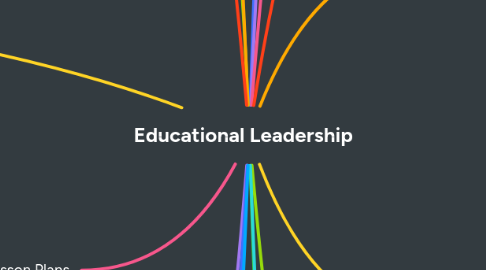
1. Leadership
1.1. Attributes of a Great Leader
1.2. Covey's Go-See-Do model
1.3. X/Y Management
1.4. Schlechty
1.4.1. Bureacracy/Learning Organization
1.5. 4 Imperatives of Leadership (Covey)
1.5.1. Inspirie Trust
1.5.2. Clarify Purpose
1.5.3. Align System
1.5.4. Unleash Talent
1.6. 5 Dysfunctions of a Team (Lencioni)
1.6.1. Absence of Trust
1.6.2. Fear of Conflict
1.6.3. Lack of Accountability
1.6.4. Avoidance of Accountability
1.6.5. Inattention to Results
2. Leadership
2.1. Inspires
2.2. Vision
2.3. Values
2.4. Equality
2.5. Choice
2.6. Voice
2.7. Dialogue
2.8. Reflection
2.9. Reciprocity
3. Strengths
3.1. Achiever
3.2. Harmony
3.3. Individualization
3.4. Focus
3.5. Significance
3.6. Myers-Briggs: Advocate INFJ
3.7. Mission Statement: I desire to pursue opportunities that allow me to invest in the lives of people through service, communication, and team-work. My previous experience and education trained me to do this through a caring attitude and by showing all people their inherent value and worth. (1 Thess. 2:10-12 for support)
3.8. Strengths are
4. Vision of a Great School
4.1. Strong Relationships
4.2. Common Purpose
4.3. Love of Learning
5. Tools
5.1. Excel
5.1.1. Pivot Tables
5.1.2. Graphs
5.2. Mind Maps
5.3. Google Sites (Blog)
5.4. Infographics
5.5. Affinity Diagram
6. Purpose/My "Why"
6.1. Hedgehog concept (Collins, 2001)
6.2. Six Levels of Commitment (Covey, 2004)
6.3. Find the signifigance/worthwhile (Pink, 2009)
6.4. Proverbs 19:21
6.5. "See, Do, Get Cycle". The way you see something changes the way you act and then you'll see the results.
6.6. "Begin with the end in mind..." (Covey)
7. Schlechty's Design Qualities
7.1. Content and Substance
7.2. Organization of Knowledge
7.3. Protection from Consequences
7.4. Clear and Compelling Standards
7.5. Product Focused
7.6. Affirmation of Performance
7.7. Novelty and Variety
7.8. Affiliation
7.9. Choice
7.10. Authenticity
7.11. Play a Game protocol
7.12. Best Learning Experience protocol
8. Vision of a Learner
8.1. Problem Solver
8.2. Respectful
8.3. Independent
8.4. Kindness
8.5. Creative
9. Strengths/Weaknesses
9.1. Buckingham says that strengths are things that satisfy us and things that we look forward to doing.
9.2. Buckingham says weaknesses can be things we are good at, but don't enjoy doing.
10. Marzano's New Art and Science of Teaching
10.1. Research-based instructional strategies and teaching methods
10.1.1. Providing and Communicating Clear Learning Goals
10.1.1.1. Element 1: Providing Scales and Rubrics
10.1.1.2. Element 2: Tracking Student Progress
10.1.1.3. Element 3: Celebrating Success
10.1.2. Using Assessments
10.1.2.1. Element 4: Using Informal Assessments of the Whole Class
10.1.2.2. Element 5: Using Formal Assessments of Individual Students
10.1.3. Direct Instruction
10.1.3.1. Element 6: Chunking Content
10.1.3.2. Element 7: Processing Content
10.1.3.3. Element 8: Recording and Representing Content
10.1.4. Conducting Practicing and Deepening Lessons
10.1.4.1. Element 9: Using Structured Practice Sessions
10.1.4.2. Element 10: Examining Similarities and Differences
10.1.4.3. Element 11: Examining Errors in Reasoning
10.1.5. Conducting Knowledge Application Lessons
10.1.5.1. Element 12: Engaging Students in Cognitively Complex Tasks
10.1.5.2. Element 13: Providing Resources and Guidance
10.1.5.3. Element 14: Generating and Defending Claims
10.1.6. Using Strategies That Appear in All Types of Lessons
10.1.6.1. Element 15: Previewing Strategies Element 16: Highlighting Critical Information Element 17: Reviewing Content Element 18: Revising Knowledge Element 19: Reflecting on Learning Element 20: Assigning Purposeful Homework Element 21: Elaborating on Information Element 22: Organizing Students to Interact
11. Philosophy of Learning
11.1. Students learn through experience
11.2. Students learn by doing
11.3. Students need to be engaged and not just be bystanders
11.4. Students are like customers and volunteers. Just cause they are there, doesn't mean that they will leave with anything or put anything into what they are doing.
11.5. Students need to see that they are cared for and then they will more likely buy into what the school is selling.
12. Deciding What to Teach and Test
12.1. “The definition of curriculum is that it consists of any document or plan that exists in a school or school system that defines the work of the teachers, at least to the extent of identifying the content to be taught to children and the possible methods to be used in the process.” (English, 2010).
12.2. Design: creation of curriculum
12.3. Delivery: how it's presented/taught
12.4. Coordination: planning curriculum with same grade, same subject
12.5. Articulation: vertical alignment
12.6. Curriculum is formal, informal, and hidden.
12.7. Curriculum is delivered written, taught, and tested.
12.8. Curriculum is a political tool
12.9. Backloading vs. Frontloading
12.10. Curriculum is constantly needing to change and grow.
13. Curriculum Design/Evaluation
13.1. What is it?
13.1.1. Lesson/unit planning
13.1.2. TEKS
13.1.3. Instructions
13.1.4. Assessments
13.2. Tools/Resources
13.2.1. TEKS Resource System
13.2.2. ASCD
13.2.3. ISTE
13.2.4. Solution Tree
13.2.5. Marzano Resources
13.2.6. CSMI
13.3. What to know
13.3.1. Content - What the student is expected to learn
13.3.2. Context - Planning out where and how the learning is taking place
13.3.3. Cognitive demand - skills that the students will need to learn and use
14. Lesson Plans
14.1. Madeline Hunter
14.1.1. Anticipatory Set
14.1.2. Direct Teach
14.1.3. Guided Practice
14.1.4. Independent Practice
14.1.5. Closure
14.2. 5E Model
14.2.1. Engage
14.2.2. Explore
14.2.3. Explain
14.2.4. Elaborate
14.2.5. Evaluate
14.3. I Do, We Do, You Do
14.4. Understanding by Design
14.4.1. Desired Resulta
14.4.1.1. Specify what students should know and be able to do as a result of the unit
14.4.1.2. Reflect both the targeted knowledge and skill and the enabling knowledge and skill implied in the understanding-related goals
14.4.2. Evidence
14.4.2.1. The focus in Stage 2 is “valid evidence”—making sure that what we assess and how we assess follows logically from the Stage 1 goals.
14.4.3. Learning Plan
14.4.3.1. Teaching is based on the desired goals and the assessment that will be used to ensure alignment and the effectiveness of the activities.