
Reduce behavior-related dog returns by 30% within 6 months at Toronto Paws as adopters apply real...


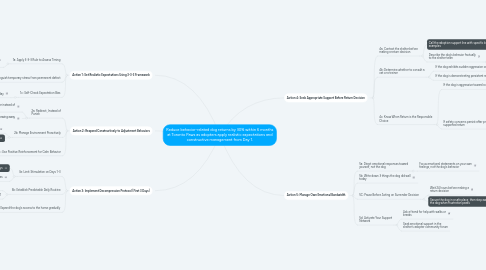
1. Action 1: Set Realistic Expectations Using 3-3-3 Framework
1.1. 1a: Apply 3-3-3 Rule to Assess Timing
1.1.1. Check the behavior log before deciding whether to keep or return the dog
1.2. 1b: Distinguish temporary stress from permanent defect
1.2.1. Compare the observed behavior to the 3-3-3 timeline
1.2.2. Describe behavior factually to shelter team
1.3. 1c: Self-Check Expectation Bias
1.3.1. Write down three ways the dog has improved since adoption day
2. Action 2: Respond Constructively to Adjustment Behaviors
2.1. 2a: Redirect, Instead of Punish
2.1.1. Remove the trigger instead of scolding
2.1.2. Offer an approved chew toy to redirect chewing away from household items
2.2. 2b: Manage Environment Proactively
2.2.1. Set up a safe zone with a crate or exercise pen
2.2.2. Block visual triggers that cause barking
2.3. 2c: Use Positive Reinforcement for Calm Behavior
2.3.1. Reward calm moments with treats or praise
2.3.2. Ignore attention-seeking barking
3. Action 3: Implement Decompression Protocol (First 3 Days)
3.1. 3a: Limit Stimulation on Days 1-3
3.1.1. Keep visitors away for the first 3 days
3.1.2. Walk only for bathroom breaks on short familiar routes
3.2. 3b: Establish Predictable Daily Routine
3.2.1. Set fixed feeding times from Day 1
3.2.2. Set fixed walk times from Day 1
3.3. 3c: Expand the dog's access to the home gradually
3.3.1. Introduce the dog to one new room per week after Day 3
3.3.2. Introduce short alone-time by 5mins every 2-3 days
4. Action 4: Seek Appropriate Support Before Return Decision
4.1. 4a: Contact the shelter before making a return decision
4.1.1. Call the adoption support line with specific behavior examples
4.1.2. Describe the dog's behavior factually to the shelter team
4.1.2.1. Avoid using overly dramatic adjectives and adverbs to describe the dog's behavior
4.2. 4b: Determine whether to consult a vet or a trainer
4.2.1. If the dog exhibits sudden aggression or lethargy, book a vet visit
4.2.2. If the dog is demonstrating persistent reactivity, consult a certified trainer
4.3. 4c: Know When Return is the Responsible Choice
4.3.1. If the dog is aggressive toward a child, contact the shelter immediately
4.3.2. If safety concerns persist after professional support, plan a supported return
4.3.2.1. Describe all steps already taken to address the behavior to the shelter team
4.3.2.2. Provide the shelter with the dog's updated behavior log
4.3.2.3. Provide the shelter with the dog's updated medical records
4.3.2.4. Follow the shelter's recommended transition timeline to reduce stress on the dog
4.3.2.5. Keep the dog's routine stable until the scheduled return date
5. Action 5: Manage Own Emotional Bandwidth
5.1. 5a: Direct emotional responses toward yourself, not the dog
5.1.1. Focus emotional statements on your own feelings, not the dog's behavior
5.2. 5b: Write down 3 things the dog did well today
5.3. 5C: Pause Before Acting on Surrender Decision
5.3.1. Wait 24 hours before making a return decision
5.3.2. Secure the dog in a safe place, then step away from the dog when frustration peaks
5.4. 5d: Activate Your Support Network
5.4.1. Ask a friend for help with walks or breaks
5.4.2. Seek emotional support in the shelter's adopter community forum