

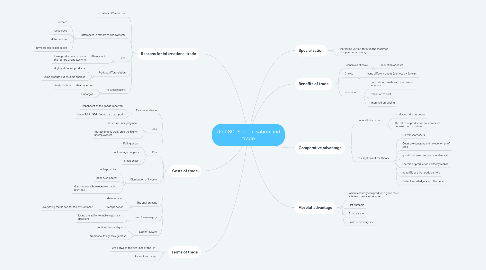
1. Reasons for international trade
1.1. e.g. Many different cars
1.2. Differences in factors of endowments
1.2.1. climate
1.2.2. rescources
1.2.3. skilled worker
1.2.4. physical capital per capita
1.3. Price
1.3.1. lower productioncosts due to differences in the factors of endowments
1.4. Product differentiation
1.4.1. slightly different products
1.4.2. Same product but multiple choices
1.5. Political reasons
1.5.1. trade deals with other countries
1.5.2. embargos
2. Costs of trade
2.1. Overdependence
2.1.1. Dependent of the goods imported
2.1.2. Huge Fall in GDP if trades are stopped
2.2. Jobs
2.2.1. structural unemployment
2.2.2. the less mobile workforce the higher unemployment
2.3. Risk
2.3.1. Falling prices
2.3.2. not enough Supplies
2.3.3. credit crises
2.4. Distribution of income
2.4.1. rich get richer
2.4.2. poor even poorer
2.4.3. Maybe unequal between two trading countries
2.5. The environment
2.5.1. deforestation
2.5.2. Transportation
2.5.2.1. everything that is bad for the environment
2.6. Loss of sovereignty
2.6.1. losing the ability to make important decisions
2.7. Loss of culture
2.7.1. foreign ideas and goods
2.7.2. traditional things may get lost
3. Terms of trade
3.1. Are between the two lines of the PPF
3.2. Ratio of exchange
4. Specialisation
4.1. increasing Output through the theory of comparative advantage
5. Benefits of trade
5.1. Economies of scale
5.1.1. reduction of costs
5.2. Choice
5.2.1. many different goods (domestic + foreign)
5.3. Innovation
5.3.1. competition creates an incentive to innovate
5.3.2. reduction of cost
5.3.3. improved producing
6. Comparative advantage
6.1. general Information
6.1.1. Its all about the porpotion
6.1.2. The ratios of production are compared between two countries
6.2. assumptions of the theory
6.2.1. No transport costs
6.2.2. Costs are constant and no economys of scale
6.2.3. goods that are compared are identical
6.2.4. Factors of production perfectly mobile
6.2.5. no tariffs or other trade barriers
6.2.6. Perfect knowledge about the price