

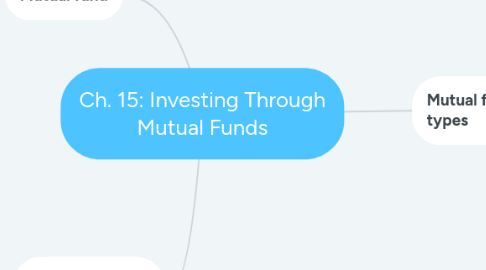
1. Mutual fund
1.1. an investment company that pools funds by selling shares & makes diversified investments
1.2. portolio
1.2.1. combined holdings of a mutual fund
1.3. net asset value
1.3.1. per share value of a mutual fund
1.4. mutual fund dividend
1.4.1. income paid to investors based on profits from firms in the fund
1.5. capital gain distribution
1.5.1. capital gains - capital losses
1.6. unique services
1.6.1. automatic reinvestment
1.6.1.1. reinvest dividends & capital gains
1.6.2. exchange privilege
1.6.2.1. can swap shares in 1 fund for shares in another fund
1.6.3. beneficiary designation
1.6.3.1. designate beneficiary to avoid probate court
1.6.4. withdrawal options
1.6.4.1. can pull out $ on a regular basis
2. Mutual fund fees & charges
2.1. load funds
2.1.1. load is the commission paid to broker
2.1.1.1. in 3%-8.5% range
2.1.2. types
2.1.2.1. front-end load
2.1.2.1.1. paid when bought
2.1.2.2. back-end load
2.1.2.2.1. paid when shares are sold
2.1.2.3. no-load
2.1.2.3.1. can purchase at net asset value without a sales charge
2.1.2.3.2. deliver higher returns
3. Mutual fund types
3.1. 3 categories:
3.1.1. income
3.1.1.1. money market fund
3.1.1.1.1. highly liquid
3.1.1.1.2. safe
3.1.1.1.3. short maturity, < 1 year
3.1.1.2. bond funds
3.1.1.2.1. invest in bonds & stocks with high dividends
3.1.2. growth
3.1.2.1. aggressive growth
3.1.2.1.1. seek the greatest long-term capital appreciation
3.1.2.2. growth
3.1.2.2.1. invests in companies with higher than average revenue & growth
3.1.2.3. growth & income
3.1.2.3.1. invests in companies with dividend income & price appreciation
3.1.2.4. value
3.1.2.4.1. invests in sound companies with low prices
3.1.3. income & growth
3.1.3.1. balanced funds
3.1.3.1.1. keeps a set mix of stocks & bonds
3.1.3.2. asset allocation funds
3.1.3.2.1. invests in stocks, bonds, cash equivalents, international assets, gold, real estate
3.1.3.3. target-date retirement funds
3.1.3.3.1. allocation of stocks, bonds, cash
3.1.3.3.2. allocation based on age & risk tolerance