

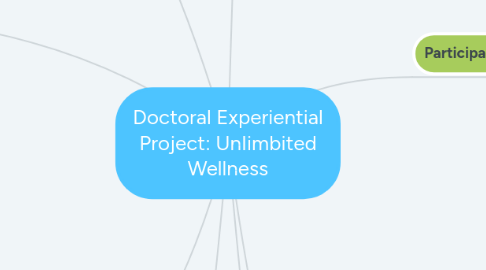
1. Theoretical Models
1.1. Precaution Adoption Process Model (PAPM)
1.1.1. Dynamic stage that the participant is in control of progressing through.
1.2. Logic Model
1.2.1. Road map that demonstrates the shared relationships among resources, activities, outputs, outcomes, and impact for your program.
1.3. Precede-Proceed Planning Model
1.3.1. Provide structure for planning a targeted and focused public health program.
1.4. Ecology of Human Performance (EHP)
1.4.1. Connects the person, context, task, performance, and therapeutic intervention. Purpose is to thoroughly understand human occupation.
2. Program Objectives
2.1. Establish a virtual peer support group for several age groups experiencing ULL/D
2.2. Increase access to peers
2.3. Address needs of all individuals experiencing ULL/D
2.4. Provide resources for individuals with ULL/D and professionals
3. Methodology
3.1. Research Question
3.1.1. Can technology be used as a resource for individuals with ULL/D and specialty providers to increase education and awareness regarding ULL/D?
3.2. Data Collection
3.2.1. Sampling Method
3.2.1.1. Inclusion Criteria
3.2.1.1.1. Specific age group with ULL/D
3.2.1.2. Exclusion Criteria
3.2.1.2.1. Limited access to technology required to participate in program, intellectual disabilities
3.2.2. Program Measures
3.2.2.1. Google Form questionnaire after each Unlimbited Wellness session
3.2.3. Participant Measures
3.2.3.1. Pre- and post-survey method to measure participants’ health and wellness perceptions
3.2.4. IRB Approval
3.2.4.1. IRB approval is needed for each age group
3.2.4.2. Parental consent needed for participants under 18
3.2.5. Needs Assessment
3.2.5.1. Will be conducted for each age group
3.3. Data Analysis
3.3.1. Surveys and will include thematic review of open-ended questions from pre- and post-surveys and session evaluations
4. Program Description
4.1. Time Frame
4.1.1. Sessions: 1-hour, once/week, for 8 weeks
4.2. Description
4.2.1. Unlimbited Wellness is a program that is designed to meet the psychosocial needs of individuals with ULL/D by providing education about secondary conditions they may encounter
4.3. Proposed Activities
4.3.1. Educational Materials
4.3.1.1. Incomplete tip sheets for participants to fill out
4.3.2. Group Discussions
4.3.3. Three Modules
4.3.3.1. Module 1: Secondary conditions-physical health
4.3.3.2. Module 2: Peer-to-peer discussion
4.3.3.3. Module 3: Secondary conditions-social-emotional health
5. Participants
5.1. Recruitment
5.1.1. Researcher's personal connections
5.1.2. Professional organizations that provide services to ULL/D population
5.2. Adults
5.2.1. 18-45 years old with ULL/D
5.2.1.1. Identified Needs
5.2.1.1.1. Experience ULL d/t trauma
5.2.1.1.2. Increased risk for psychological complications (i.e. PTSD, depression, anxiety, maladaptive coping strategies)
5.2.1.1.3. Limited resources specific to ULL experience
5.2.1.1.4. Lifestyle reintegration following ULL greatly challenged (return to work)
5.2.2. 46+ years old with ULL/D
5.2.2.1. Identified Needs
5.2.2.1.1. Increased anxiety and depression
5.2.2.1.2. Lower overall life satisfaction
5.2.2.1.3. Difficulty completing some activities
5.3. Pediatrics
5.3.1. 13-18 years old with ULL/D
5.3.1.1. Identified Needs
5.3.1.1.1. Limited data on adolescent population
5.3.1.1.2. Lack of resources related to condition
5.3.1.1.3. Decreased confidence, self-image, and self-efficacy
5.3.1.1.4. Lack of peer support
5.3.2. 5-12 years old with ULL/D
5.3.2.1. Identified Needs
5.3.2.1.1. Need for education
5.3.2.1.2. Limited resources
5.3.2.1.3. Environmental restrictions
5.3.2.1.4. Negative self-image
6. Resources
6.1. What we can provide to our population
6.1.1. Educational Materials
6.1.1.1. Secondary physical and psychological conditions
6.1.1.2. Specific materials related to age group
6.1.2. Peer support
6.1.3. Strategies for problem solving
7. Setting
7.1. Description of setting
7.1.1. The WNEU TH center located in the basement of the Bellamy house
7.1.2. Available resources
7.1.2.1. There are 4 desks and chairs for DEx students to run groups specific to their population from
7.2. Additional resources needed
7.2.1. TV or screen for projecting
7.2.2. Divider for room
7.2.3. Conference-style phone
8. Other Considerations
8.1. Privacy/Confidentiality
8.1.1. Platform must be HIPAA compliant
8.1.1.1. Zoom
8.1.2. Secure internet connection
8.1.2.1. Data encryption
8.1.2.2. Password protected
8.1.2.3. Secure storage
8.1.3. Protection of patient information
8.1.4. Physical space is separate from others
8.2. Technology
8.2.1. Zoom subscription cost
8.2.2. Equipment
8.2.2.1. Cameras
8.2.2.2. Video/audio capabilities
8.2.2.3. Computers
8.2.2.4. Television/projector
8.2.2.5. Headsets
8.2.3. Trouble shooting
8.2.3.1. Helping participants understand the technology
8.2.3.2. Fixing our problem