

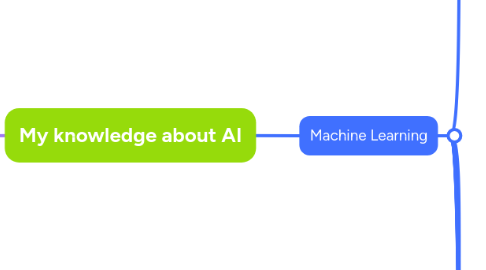
1. Neural Networks and Deep Learning
1.1. Training Deep Neural Networks
1.1.1. Vanishing/Exploding Gradients Problems
1.1.2. Reusing Pretrained Layers
1.1.3. Faster Optimizers
1.1.4. Avoiding Overfitting Through Regularization
1.2. Custom Models and Training
1.2.1. Custom Loss Functions
1.2.2. Saving and Loading Models
1.2.3. Activation Functions, Initializers, Regularizers, and Constraints
1.2.4. Metrics
1.2.5. Layers
1.2.6. Custom Models
1.2.7. Losses and Metrics Based on Model Internals
1.2.8. Computing Gradients Using Autodiff
1.2.9. Custom Training Loops
1.3. Loading and Preprocessing Data
1.3.1. Chaining Transformations
1.3.2. Shufing the Data
1.3.3. Preprocessing the Data
1.3.4. Putting Everything Together
1.3.5. Prefetching
1.4. Computer Vison
1.4.1. Convolutional Layer
1.4.2. Pooling Layer
1.4.3. CNN Architectures
1.4.4. Object Detection
1.4.4.1. Yolo
1.4.4.2. RCNN, Fast, faster RCNN
1.4.4.3. SSD
1.4.5. Semantic Segmentation
1.4.5.1. Unet
1.4.5.2. Mask-CNN
1.4.5.3. FCN
2. Machine Learning
2.1. Lanscape
2.1.1. What is
2.1.1.1. Machine Learning is the field of study that gives computers the ability to learn without being explicitly programmed.
2.1.2. Why use
2.1.2.1. Identifying Spam, Making Product Recommendations, Customer Segmentation, Image & Video Recognition, Fraudulent Transactions, Demand Forecasting, Virtual Personal Assistant, Sentiment Analysis, Customer Service Automation.
2.1.3. Type of ML syteams
2.1.3.1. Supervised learning
2.1.3.1.1. Definition: Supervised learning is the machine learning task of learning a function that maps an input to an output based on example input-output pairs. It infers a function from labeled training data consisting of a set of training examples.
2.1.3.1.2. • k-Nearest Neighbors • Linear Regression • Logistic Regression • Support Vector Machines (SVMs) • Decision Trees and Random Forests • Neural networks2
2.1.3.2. Unsupervised learning
2.1.3.2.1. Definition: Unsupervised learning is a type of algorithm that learns patterns from untagged data. The hope is that through mimicry, which is an important mode of learning in people, the machine is forced to build a compact internal representation of its world and then generate imaginative content from it.
2.1.3.2.2. Clustering: K-Means. Anomaly detection and novelty detection. Visualization and dimensionality reduction. Association rule learning
2.1.3.3. Semi supervised learning
2.1.3.3.1. Supervised learning is the machine learning task of learning a function that maps an input to an output based on example input-output pairs. It infers a function from labeled training data consisting of a set of training examples.
2.1.3.4. Batch and Online Learning
2.1.3.4.1. Batch learning
2.1.3.4.2. Online learning
2.1.3.4.3. Instance-based learning vs Model-Based Learning
2.1.4. Challenges
2.1.4.1. Insufficient Quantity of Training Data
2.1.4.2. Nonrepresentative Training Data
2.1.4.3. Poor-Quality Data
2.1.4.4. Irrelevant Features
2.1.4.5. Overfitting: Good performance on the training data, poor generliazation to other data.
2.1.4.6. Underfitting: Poor performance on the training data and poor generalization to other data
2.1.5. Testing and Validating
2.1.5.1. Hyperparameter Tuning and Model Selection
2.1.5.2. Data Mismatch
2.2. End to end project
2.2.1. Look at the Big Picture
2.2.2. Get the Data
2.2.3. Discover and Visualize the Data to Gain Insights
2.2.4. Prepare the Data for ML Algorithms
2.2.5. Select and Train a Model
2.2.6. Fine-Tune Your Model
2.3. Classfication
2.3.1. MNIST dataset: which is a set of 70,000 small images of digits handwritten
2.3.2. Training a Binary Classifier
2.3.3. Performance Measures
2.3.3.1. Accuracy Using Cross-Validation
2.3.3.2. Confusion Matrix
2.3.3.3. Precision and Recall
2.3.3.4. The ROC Curve
2.3.4. Multiclass
2.3.5. Multilabel
2.3.6. Multioutput
2.4. Traning model
2.4.1. Linear Regression
2.4.2. Gradient Descent
2.4.2.1. Polynomial Regression
2.4.2.2. Learning Curves
2.4.3. Regularized Linear Models
2.4.4. Logistic Regression