


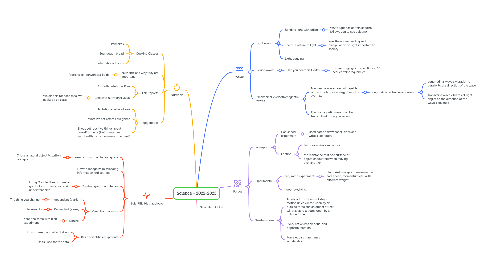
1. Nutrition
1.1. Cooking Classes
1.1.1. Pancakes
1.1.2. Sour dough bread
1.1.3. International Foods
1.2. Nutrients and why they are important
1.2.1. Proteins, carbohydrates, lipids
1.3. Lab Reports
1.3.1. 1 month nutritional Plan
1.3.2. Calculate nutritional value
1.3.2.1. We did this for each meal we cooked as a class
1.4. Epigenetics
1.4.1. Nutritional value of kale
1.4.2. What we eat effects our genes
1.4.3. Shout out positive things about ourself in circle (Helps improve your health by psitive re-enforcement)
2. Waves
2.1. Light waves
2.1.1. Bending light with prism
2.1.1.1. White light has certain spectre (Allows you to see colours)
2.1.2. The true nature of light
2.1.2.1. Was the understanding and manipulation of Light important to society
2.1.3. Light bending
2.2. Sound waves
2.2.1. Can you hear this Hertz?
2.2.1.1. Different age groups can (Or can't) hear certain frequencies
2.3. Mechanical vs electromagnetic waves
2.3.1. Mechanical waves are not capable of transmitting its energy through a vacuum.
2.3.1.1. longitudinal vs transverse waves
2.3.1.1.1. Longitudinal wave's vibration is parallel to the direction of the wave
2.3.1.1.2. Transverse wave vibrates at right angles to the direction of the wave's advance
2.3.2. Electromagnetic waves can be transmitted through a vacuum
3. Forces
3.1. Lab report
3.1.1. Car speed experiment
3.1.1.1. Used data to draw conclusions and write a lab report
3.1.2. Friction
3.1.2.1. Frictions online simulations
3.1.2.2. the resistance that one surface or object encounters when moving over another
3.2. Experiments
3.2.1. Car / ramp experiment
3.2.1.1. Using Arduino app to measure the cars speed, momentum etc. with different weight
3.2.2. Indoor skydiving
3.3. Newton's laws
3.3.1. An object in motion will stay in motion unless acted upon by an outside force and an object at rest will stay at rest acted upon by an outside force.
3.3.2. Every action has an equal and opposite reaction
3.3.3. Force equals mass times acceleration
4. Scientific Methadologie
4.1. Learning how to write lab reports
4.1.1. Chose a natural object to write a lab report on.
4.2. How to recognize missleading information and sources
4.3. Creating graphs and tables
4.3.1. Using Google Sheets to make graphs look professional and understandable
4.4. Variables in science
4.4.1. Independant (y axis)
4.4.1.1. The thing you change
4.4.2. Dependant (x axis)
4.4.2.1. The resaults
4.4.3. Control
4.4.3.1. Keep the same within an experiment
4.5. Basic scientific equipments
4.5.1. How to use it and what it does
4.5.2. Units used for the data