


1. The Big Picture
1.1. Clinton's 5 Phases of Leadership
1.1.1. Phase1: Soveriegn Foundations
1.1.2. Phase 2:Inner Life Growth
1.1.3. Phase 3 Ministry Maturing
1.1.4. Phase 4 Life Maturing
1.1.5. Phase 5 Convergence
1.2. EIGHT THINGS A MENTOR DOES
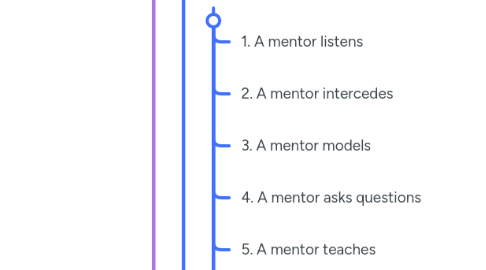
1.2.1. 1. A mentor listens
1.2.2. 2. A mentor intercedes
1.2.3. 3. A mentor models
1.2.4. 4. A mentor asks questions
1.2.5. 5. A mentor teaches
1.2.6. 6. A mentor sets the pace
1.2.7. 7. A mentor involves the mentee with other Christians
1.2.8. 8. A mentor gives options, not answers
1.3. HOW TO BE AN EFFECTIVE MENTOR
1.3.1. 1. Be able to communicate
1.3.2. 2. Be prepared
1.3.3. 3. Select a mentee whose philosophy of life you share
1.3.4. 4. Choose a person with potential in which you genuinely believe.
1.3.5. 5. Evaluate a mentee’s progress constantly.
1.3.6. 6. Be committed, serious, and available to mentees.
1.3.7. 7. Be honest and gracious, candid and straightforward.
1.3.8. 8. Be a lifelong learner.If you do not know answer ask to search together
1.3.9. 9. Be transparent and fair.
1.3.10. 10. Show compassion and genuineness
1.3.11. 11. Motivate and inspire.
1.3.12. 12. Set professional boundaries
1.4. HOW TO BE AN EFFECTIVE MENTEE 10 Points
1.4.1. 1. Learn from the mentor how to ask the right questions,
1.4.2. 2. Focus on improvement
1.4.3. 3. Accept a learning position
1.4.4. 4. Respect the mentor
1.4.5. 5. Immediately put into effect what you are learning:
1.4.6. 6. Be disciplined in relating to the mentor.
1.4.7. 7. Reward your mentor with consistent progress.
1.4.8. 8. Learn to ask critical-thinking questions
1.4.9. 9. Do not threaten to give up
1.4.10. 10. Expect accountability
2. The Big Q. of Teacher’s Day
2.1. Time Line
2.1.1. 1. Define Your Timeline
2.1.2. 2. Research and Historical Context
2.1.3. 3.Identify Key Figures
2.1.4. 4. Examine Mentoring Approaches
2.1.5. 5. Document Mentorship Programs
2.1.6. 6. Consider the Mentees:
2.1.7. 7. Evaluate Outcomes
2.1.8. 8. Technological Advancements
2.2. Confucious vs Biblical Mentoring Principles
2.3. Coaching 53 principles vs. Mentoring 10 commandments
2.4. Mentoring Models
2.4.1. Upward Mentors
2.4.1.1. Moses and Joshua
2.4.2. Peer Co-Mentors
2.4.2.1. David and Jonathan
2.4.3. Downward Mentoring
2.5. Types of Mentors
2.5.1. Intensive
2.5.2. Occasional
2.5.3. Passive
2.6. Principles of the "Deep Bench"
2.6.1. Pros
2.6.1.1. Resilience
2.6.2. Cons
2.6.2.1. Complex Decision-Making
2.6.2.2. Challenging Conflict Resolution
2.6.2.3. Risk of Power Concentration
2.6.2.4. Difficulty in Resource Allocation
2.6.2.5. Accountability
2.7. Dangal first 30 minutes
2.7.1. When mentor comes on driving seat father has to sit at the back
2.8. 7 Mountains Mandate
3. Dark Night of the Soul
3.1. When the Chisel Hits the Rock
3.1.1. Examination through Biblical Personality
3.1.2. Personal Experiences
3.1.3. Wildermess and Solitude
3.1.4. Example of Caterpillar
3.2. Dangal 30 minutes
3.3. Discussion on 5 Phases of Robert J Clinton
3.4. Deepening through hard times
4. Finish Well vs. Leadership Coaching
4.1. Dangal 2nd part
4.1.1. Turning Point when girls knew their father loved them and caring for them
4.1.2. Skills were improved
4.1.3. Time Management
4.1.4. Self Control
4.1.5. Reselience
4.1.6. Structured Training
4.2. The Disciplines, Skills, and Heart of a Christian Coach
4.3. Characteristics of a Good Coach
4.3.1. 1. Coaches Listen
4.3.2. 2. The Coach Ask
4.3.3. 3. Coach Sees More than He/She Says
4.3.4. 4 Coach Gives Responsibility
4.3.5. 5. Coach Works through Internal Motivation
4.3.6. 6. Coach Respects Free Will
4.3.7. 7. . Coach Honors Human Uniqueness
4.4. Characteristics of Those Who Finish Well
4.4.1. Perspective and Focus
4.4.2. Intimacy with Christ
4.4.3. Discipline
4.4.4. Meaningful Relationships:
4.4.5. Guiding Principles for Adult Learning
4.4.6. Encouragement to Help Others Finish Well: