


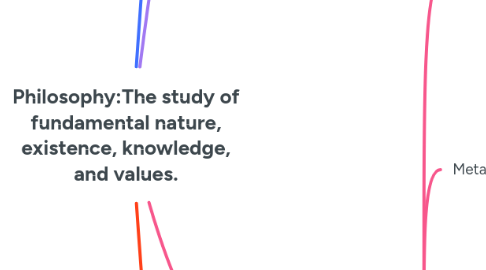
1. Branches
1.1. Epistemology
1.2. Metaphysics
1.3. Ethics
1.4. Logic
1.5. Aesthetics
2. Interconncetions
2.1. Epistemology-->Metaphysics
2.2. Epistemology-->Ethics
2.3. Metaphyscis-->Ethics
2.4. Metaphysics-->Aesthetics
2.5. Ethics-->Aesthetics
2.6. Logic-->Epistemology
2.7. Logic-->Metaphysics
2.8. Logic-->Ethics
2.9. Logic-->Aesthetics
2.10. Aesthetics-->Epistemology
2.11. Aesthetics-->Metaphysics
2.12. Aesthetics-->Ethics
3. Definations
3.1. Epistemology: Investigates the nature of knowledge.
3.1.1. Sub-branches:
3.1.1.1. a.Rationalism: Emphasizes reason as a source of knowledge.
3.1.1.2. b. Empiricism: Emphasizes sensory experience.
3.1.2. Prominent Philosophers:
3.1.2.1. a. Plato
3.1.2.2. b. John Locke
3.2. Metaphysics:Examines the nature of reality.
3.2.1. Sub-branches:
3.2.1.1. a. Ontology: Study of being and existence.
3.2.1.2. b. Cosmology: Study of the universe's origin and structure.
3.2.2. Influential Theories:
3.2.2.1. a. Aristotle's Substance Theory
3.2.2.2. b. Leibniz's Monadology
3.3. Ethics:Examines concepts of right and wrong.
3.3.1. Sub-branches:
3.3.1.1. a. Metaethics: Analyzes the nature of ethical properties.
3.3.1.2. b. Normative Ethics: Examines moral standard.
3.3.2. Key Theories:
3.3.2.1. a. Utilitarianism
3.3.2.2. b. Deontology
3.4. Aesthetics:Studies beauty and artistic expression.
3.4.1. Sub-branches:
3.4.1.1. a. Philosophy of Art: Examines the nature of art.
3.4.1.2. b. Axiology: Studies values, including aesthetic values.
3.4.2. Influential Figures:
3.4.2.1. a. Immanuel Kant
3.4.2.2. b. John Dewey
3.5. Logic:Studies principles of valid reasoning.
3.5.1. Sub-branches:
3.5.1.1. a. Formal Logic: Examines the form of valid arguments.
3.5.1.2. b. Informal Logic: Analyzes natural language arguments.
3.5.2. Notable Contributions:
3.5.2.1. a. Aristotle's Syllogistic Logic
3.5.2.2. b. Symbolic Logic