


HTN
作者:ujala khush
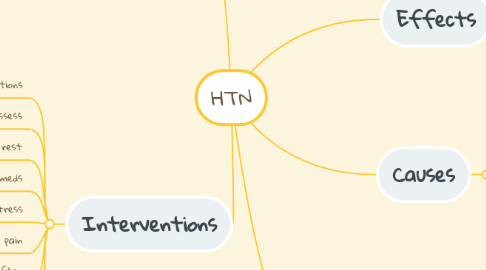
1. Interventions
1.1. Fluid restrictions
1.2. Cardiopulmonary assess
1.3. Promote rest
1.4. Administration of bp meds
1.5. Decrease stress
1.6. Control pain
1.7. Assess HR and BP before and after
1.8. Educate about disease
1.9. Medication instructions
1.10. Adequate exercise plan
2. Nursing diagnosis
2.1. Deficient knowledge regarding the relationship b/w treatment regimen and control of disease process
2.2. Non-compliance with the therapeutic regimen r/t side effects of prescribed therapy
3. Causes
3.1. Inflammation
3.1.1. Chronic inflammation causes histamine and cytokines make blood vessels stiff
3.2. Proteinuria suggests kidney damage
3.2.1. Hematuria, nocturia
3.3. Sodium retention ~kidney
3.4. Stress, age
4. Effects
4.1. Papilledema
4.2. Coronary artery disease,angina and MI
4.3. Left ventricular hypertrophy
4.4. Kidneys;Blood urea|and creatinine levels increase~nocturia
4.5. Stroke or transient ischemic attack TIA
4.5.1. Shown by hemiplagia, blurred vision, dizziness, sudden fall
5. Pharma
5.1. Diuretics
5.1.1. Lasix
5.2. Beta blockers
5.2.1. Propranolol ~inderal
5.3. Emergency ~ organ failure...bp should be maintain less thn 140/90 Urgency ~ no organ damage predicted Beta-adrenergic blocking agents (labetalol) ACE inhibitors i.e the blocking of angiotensin 1 converting enzyme of lung( captopril)
5.4. Beta-blockers atenolol
5.4.1. Lol
5.5. Calcium chain blockers_verapamil and amlodipine
5.5.1. Pine
5.6. Vasodilater
5.6.1. Hydralazine
5.6.1.1. Nitrates
5.7. ACE inhibitors
5.7.1. Catopril
5.7.1.1. Pril