
HIGH SCHOOL EFL TEACHERS’ PERSPECTIVES ON THE USE OF THE CEFR-V FRAMEWORK IN TEACHING


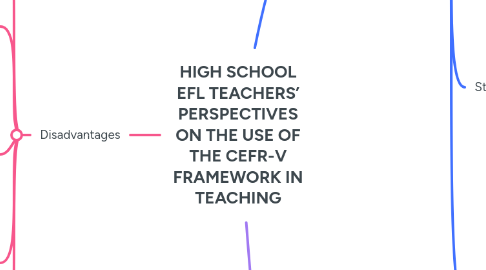
1. Disadvantages
1.1. Mixed Student Proficiency Levels
1.1.1. Difference in students' proficiency level within a classroom
1.1.2. Teaching all students to have writing, speaking, and listening skills at required CEFR-V levels
1.2. Lack of Resources and Materials
1.2.1. A lack of appropriate materials aligned with the CEFR
1.2.2. Overcrowded class
1.2.3. Underequipped classrooms facilities, espcially in rural regions
1.3. Time Constraints
1.3.1. CEFR-V based classroom activities are time-consuming
1.3.2. A lack of time for lesson planning
1.4. Teachers' Understanding
1.4.1. Teachers' limited understanding and familiarity about CEFR-V
1.4.2. Inadequate training for teachers on the appropriate usage of CEFR-V
1.5. System and Policy-related issues
1.5.1. Low teacher salaries hinder investment in time and resources
1.5.2. CEFR-V objectives are not closely aligned with the format of high school graduation exam
2. Advantages
2.1. Objective Setting and Planning
2.1.1. Identify and set appropriate learning objectives
2.1.2. Provide a framework for clear learning objectives and structured lesson planning
2.1.3. Tailor lesson plans to accomplish teaching goals
2.2. Material and Resource Utilization
2.2.1. Adapt and utilize materials to suit students' proficiency levels
2.2.2. Integrate CEFR-based teaching resources and textbooks
2.3. Assessment and Evaluation
2.3.1. Measure students' skills to adjust teaching
2.3.2. Utilize formative assessment for learners' competence
2.3.3. Design targeted assessments for students' proficiency levels
2.3.4. Promote coherence across the high school English curriculum and assessments
2.4. Teacher Development and Training
2.4.1. Improve teaching skills
2.4.2. Serve as a tool for teacher training
2.4.3. Integrate teachers into new global trends in teaching English
2.4.4. Enhance teacher agency by providing a framework supporting educational reforms
2.5. Student Skill Development
2.5.1. Integrate skills in lesson design
2.5.2. Help students understand the competences required at each language proficiency level
2.5.3. Enable students to self-study using various CEFR-aligned materials
2.6. Alignment with Global Standards
2.6.1. Facilitate relationships between policy, teaching, learning, and assessment
2.6.2. Describe what language learners need to do for effective communication
2.6.3. Enable easy transfer of language skills across different contexts and institutions
2.6.4. Equip learners with necessary communicative skills for diverse linguistic environments
3. Recommendations Arising from Challenges
3.1. Training and Support
3.1.1. o Support from higher authority
3.1.2. o Evaluation of teachers
3.1.3. o Professional development
3.2. Resources
3.2.1. o Provide teachers with more resources
3.2.2. o Access to appropriate materials
3.3. Teacher Commitment
3.4. Methodology
3.4.1. o Enhance new teaching methods
3.4.2. o Use modern techniques
3.4.3. o Flexible application
3.5. Application and Integration
3.5.1. o Integration of authentic materials
3.5.2. o Exercise practice
3.5.3. o Focus on all 4 skills