


Listening
作者:Stakeholder Map
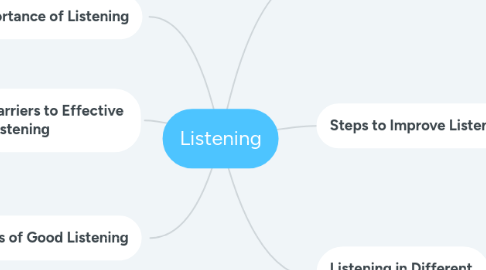
1. The Importance of Listening
1.1. Builds strong relationships
1.2. Prevents misunderstandings
1.3. Increases knowledge and understanding
2. Barriers to Effective Listening
2.1. Noise and distractions
2.2. Lack of focus
2.3. Mental and emotional distractions
2.4. Prejudices or personal bias
3. The Effects of Good Listening
3.1. Increase in trust and respect
3.2. Better problem-solving
3.3. Greater sharing of information
3.4. Reduction in conflicts
4. Types of Listening
4.1. Active Listening
4.1.1. Giving full attention to the speaker
4.1.2. Providing feedback
4.2. Passive Listening
4.2.1. Hear but not fully engaged
4.3. Empathic Listening
4.3.1. Attempting to understand the speaker's feelings
4.4. Critical Listening
4.4.1. Analyzing what's being said for decision making
5. Steps to Improve Listening
5.1. Pay attention
5.2. Show that you're listening
5.3. Provide feedback
5.4. Defer judgment
5.5. Respond appropriately
6. Listening in Different Contexts
6.1. Listening in Education
6.1.1. To teachers
6.1.2. To classmates during discussions
6.2. Listening at Work
6.2.1. During meetings
6.2.2. To clients and customers
6.3. Listening in Relationships
6.3.1. To partner's feelings and needs
6.3.2. During disagreements