


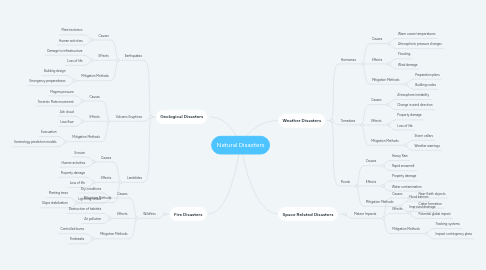
1. Geological Disasters
1.1. Earthquakes
1.1.1. Causes
1.1.1.1. Plate tectonics
1.1.1.2. Human activities
1.1.2. Effects
1.1.2.1. Damage to infrastructure
1.1.2.2. Loss of life
1.1.3. Mitigation Methods
1.1.3.1. Building design
1.1.3.2. Emergency preparedness
1.2. Volcanic Eruptions
1.2.1. Causes
1.2.1.1. Magma pressure
1.2.1.2. Tectonic Plate movement
1.2.2. Effects
1.2.2.1. Ash cloud
1.2.2.2. Lava flow
1.2.3. Mitigation Methods
1.2.3.1. Evacuation
1.2.3.2. Seismology prediction models
1.3. Landslides
1.3.1. Causes
1.3.1.1. Erosion
1.3.1.2. Human activities
1.3.2. Effects
1.3.2.1. Property damage
1.3.2.2. Loss of life
1.3.3. Mitigation Methods
1.3.3.1. Planting trees
1.3.3.2. Slope stabilization
2. Fire Disasters
2.1. Wildfires
2.1.1. Causes
2.1.1.1. Dry conditions
2.1.1.2. Lightning strikes
2.1.2. Effects
2.1.2.1. Destruction of habitats
2.1.2.2. Air pollution
2.1.3. Mitigation Methods
2.1.3.1. Controlled burns
2.1.3.2. Firebreaks
3. Weather Disasters
3.1. Hurricanes
3.1.1. Causes
3.1.1.1. Warm ocean temperatures
3.1.1.2. Atmospheric pressure changes
3.1.2. Effects
3.1.2.1. Flooding
3.1.2.2. Wind damage
3.1.3. Mitigation Methods
3.1.3.1. Preparation plans
3.1.3.2. Building codes
3.2. Tornadoes
3.2.1. Causes
3.2.1.1. Atmosphere instability
3.2.1.2. Change in wind direction
3.2.2. Effects
3.2.2.1. Property damage
3.2.2.2. Loss of life
3.2.3. Mitigation Methods
3.2.3.1. Storm cellars
3.2.3.2. Weather warnings
3.3. Floods
3.3.1. Causes
3.3.1.1. Heavy Rain
3.3.1.2. Rapid snowmelt
3.3.2. Effects
3.3.2.1. Property damage
3.3.2.2. Water contamination
3.3.3. Mitigation Methods
3.3.3.1. Flood barriers
3.3.3.2. Improved drainage
4. Space Related Disasters
4.1. Meteor Impacts
4.1.1. Causes
4.1.1.1. Near-Earth objects
4.1.2. Effects
4.1.2.1. Crater formation
4.1.2.2. Potential global impact
4.1.3. Mitigation Methods
4.1.3.1. Tracking systems
4.1.3.2. Impact contingency plans