
Yoga

This detailed and comprehensive Mind Map titled "Mind Map Yoga" explores the multifaceted world of yoga. It covers various Types of Yoga such as Hatha, Ashtanga, Bikram, and Kundalini, delving into their specific practices and features. It also highlights the health benefits of practicing yoga, including enhanced flexibility, strength development, and stress reduction. For beginners and experts alike, it offers a rundown of essential Yoga Equipment like mats, blocks, straps, and bolsters. In ...

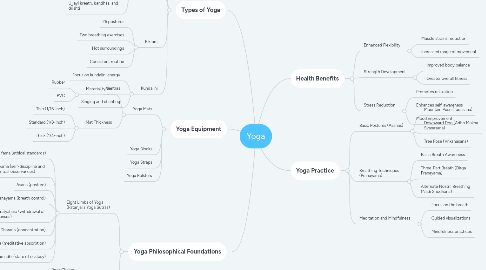
1. Types of Yoga
1.1. Hatha
1.1.1. Fundamental yogic postures
1.1.2. Breathing techniques
1.1.3. Mental focus and meditation
1.2. Ashtanga
1.2.1. Vinyasa-style yoga
1.2.2. Systematized sequence of postures
1.2.3. Sun salutations
1.2.4. Ujjayi breath, bandhas, and drishti
1.3. Bikram
1.3.1. 26 postures
1.3.2. Two breathing exercises
1.3.3. Hot surroundings
1.3.4. Consistent routine
1.4. Kundalini
1.4.1. Focus on kundalini energy
1.4.2. Mantras
1.4.3. Singing and chanting
2. Yoga Equipment
2.1. Yoga Mats
2.1.1. Material types
2.1.1.1. Rubber
2.1.1.2. PVC
2.1.2. Mat Thickness
2.1.2.1. Thin (1/16-inch)
2.1.2.2. Standard (1/8-inch)
2.1.2.3. Thick (1/4-inch)
2.2. Yoga Blocks
2.3. Yoga Straps
2.4. Yoga Bolsters
3. Yoga Philosophical Foundations
3.1. Eight Limbs of Yoga (Patanjalis Yoga Sutras)
3.1.1. Yama (ethical standards)
3.1.2. Niyama (self-discipline and spiritual observances)
3.1.3. Asana (posture)
3.1.4. Pranayama (breath control)
3.1.5. Pratyahara (withdrawal of senses)
3.1.6. Dharana (concentration)
3.1.7. Dhyana (meditative absorption)
3.1.8. Samadhi (state of ecstasy)
3.2. Chakras
3.2.1. Root Chakra
3.2.2. Sacral Chakra
3.2.3. Solar Plexus Chakra
3.2.4. Heart Chakra
3.2.5. Throat Chakra
3.2.6. Third Eye Chakra
3.2.7. Crown Chakra
4. Health Benefits
4.1. Enhanced Flexibility
4.1.1. Muscle strains reduction
4.1.2. Increased range of movement
4.2. Strength Development
4.2.1. Improved body balance
4.2.2. Greater overall fitness
4.3. Stress Reduction
4.3.1. Promotes relaxation
4.3.2. Enhances self-awareness
4.3.3. Mood improvement
5. Yoga Practice
5.1. Basic Postures (Asanas)
5.1.1. Mountain Pose (Tadasana)
5.1.2. Downward Dog (Adho Mukha Svanasana)
5.1.3. Tree Pose (Vrikshasana)
5.2. Breathing Techniques (Pranayama)
5.2.1. Basic Breath Awareness
5.2.2. Three-Part Breath (Dirga Pranayama)
5.2.3. Alternate Nostril Breathing (Nadi Shodhana)
5.3. Meditation and Mindfulness
5.3.1. Focus on the breath
5.3.2. Guided visualizations
5.3.3. Mindfulness practices