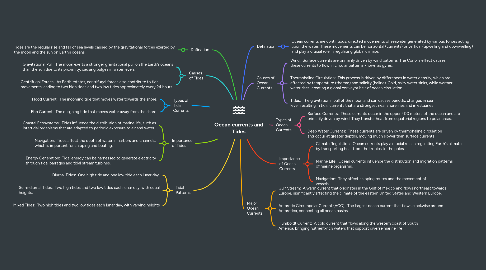
1.1. Ocean currents are continuous, directed movements of seawater generated by various forces acting upon the water. These movements can be horizontal (currents) or vertical (upwelling and downwelling) and play a crucial role in regulating global climate.
2. Causes of Ocean Currents
2.1. Wind: Surface currents are primarily driven by wind patterns. The Coriolis effect causes these currents to flow in circular patterns known as gyres.
2.2. Thermohaline Circulation: This process is driven by differences in water density, which are affected by temperature (thermo) and salinity (haline). Cold, salty water sinks, while warmer water rises, creating a global conveyor belt of ocean circulation.
2.3. Tides: The gravitational pull of the moon and sun causes periodic changes in sea level, resulting in tidal currents that are strongest near shorelines and in estuaries
3. Types of Ocean Currents
3.1. Surface Currents: These currents occur in the upper 400 meters of the ocean and are primarily driven by wind. They transfer heat from equatorial regions to polar areas.
3.2. Deep Water Currents: These currents are driven by thermohaline circulation and occur at greater depths, moving much slower than surface currents
4. Types of Tidal Currents
4.1. Flood Current: The incoming tide that moves water towards the shore.
4.2. Ebb Current: The outgoing tide that moves water away from the shore.
5. Causes of Tides
5.1. Gravitational Pull: The moon exerts a stronger gravitational pull on the Earth’s oceans than the sun due to its proximity, causing bulges in water levels.
5.2. Centrifugal Forces: As Earth rotates, centrifugal forces also contribute to tidal movements,leading to two high tides and two low tides approximately every 24 hours.
6. Defination
6.1. Tides are the regular rise and fall of sea levels caused by the gravitational forces exerted by the moon and the sun on Earth’s oceans.
7. Importance of Ocean Currents
7.1. Climate Regulation: Ocean currents play a crucial role in regulating Earth's climate by transporting heat from the tropics to the poles.
7.2. Marine Life: Ocean currents influence the distribution and migration patterns of marine organisms.
7.3. Navigation: They affect shipping routes and the movement of vessels.
8. Importance of Tides
8.1. Coastal Ecosystems: Tides influence the distribution of marine life, such as intertidal organisms that are adapted to periodic exposure to air and water.
8.2. Navigation: Tides affect the depth of water in harbors and channels, which is important for shipping and boating.
8.3. Energy Generation: Tidal energy can be harnessed to generate electricity through tidal barrages and tidal stream turbines.
9. Tidal Patterns
9.1. Diurnal Tides: One high tide and one low tide each lunar day.
9.2. Semi-diurnal Tides: Two high tides and two low tides each lunar day, with equal heights.
9.3. Mixed Tides: Two high tides and two low tides each lunar day, with varying heights
10. Major Ocean Currents
10.1. Gulf Stream: A warm current that originates in the Gulf of Mexico and flows northeast towards Europe, significantly affecting the climate of the eastern United States and Western Europe.
10.2. Antarctic Circumpolar Current (ACC): The largest ocean current that flows clockwise around Antarctica, connecting all ocean basins.
10.3. Humboldt Current: A cold current that flows along the western coast of South America, bringing nutrient-rich waters that support diverse marine life