

TOUR 275 05 - Spring 2025: Tourism and the SDGs
作者:Pooja Maini
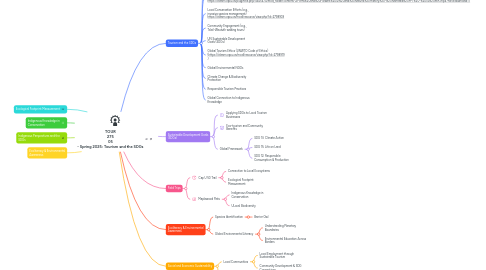
1. Ecological Footprint Measurement
2. Indigenous Knowledge in Conservation
3. Indigenous Perspectives and the SDGs
4. Ecoliteracy & Environmental Awareness
5. Tourism and the SDGs
5.1. Eco Literacy
5.2. Species Identification (Flora and Fauna) https://elearn.capu.ca/pluginfile.php/3445474/mod_folder/content/0/Ferns%20and%20Flowers%20ID%20and%20Natural%20History%20-%20Narrated%20PPT%20-%2014%20min..mp4?forcedownload=1
5.3. Local Conservation Efforts (e.g., invasive species management) https://elearn.capu.ca/mod/resource/view.php?id=2798903
5.4. Community Engagement (e.g., Tsleil-Waututh walking tours)
5.5. UN Sustainable Development Goals (SDGs)
5.6. Global Tourism Ethics (UNWTO Code of Ethics) (https://elearn.capu.ca/mod/resource/view.php?id=2798919 )
5.7. Global Environmental NGOs
5.8. Climate Change & Biodiversity Protection
5.9. Responsible Tourism Practices
5.10. Global Connection to Indigenous Knowledge
6. Sustainable Development Goals (SDGs)
6.1. Applying SDGs to Local Tourism Businesses
6.2. Eco-tourism and Community Benefits
6.3. Global Framework
6.3.1. SDG 13: Climate Action
6.3.2. SDG 15: Life on Land
6.3.3. SDG 12: Responsible Consumption & Production
7. Field Trips
7.1. Cap U 50 Trail
7.1.1. Connection to Local Ecosystems
7.1.2. Ecological Footprint Measurement
7.2. Maplewood Flats
7.2.1. Indigenous Knowledge in Conservation
7.2.2. ULocal Biodiversity
8. Ecoliteracy & Environmental Awareness
8.1. Species Identification
8.1.1. Barrier Owl
8.2. Global Environmental Literacy
8.2.1. Understanding Planetary Boundaries
8.2.2. Environmental Education Across Borders
9. Social and Economic Sustainability
9.1. Local Communities
9.1.1. Local Employment through Sustainable Tourism
9.1.2. Community Development & SDG Connections
9.2. Global Context
9.2.1. Poverty Alleviation via Tourism
9.2.2. Sustainable Development in Developing Countries