

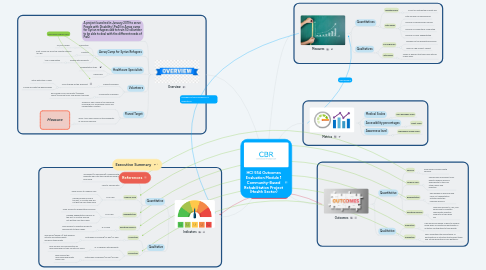
1. Overview
1.1. A project launched in January 2019 to serve People with Disability (PwD) in Azraq camp for Syrian refugees add to train 50 volunteer to be able to deal with the different needs of PwD.
1.2. Azraq Camp for Syrian Refugees
1.2.1. Population
1.2.1.1. 47,000 People
1.2.2. Location
1.2.2.1. East Jordan far from the Capital Amman 150 km
1.2.3. People with Disability
1.2.3.1. 14% of Population
1.3. Healthcare Specialists
1.3.1. Rehabilitation team
1.3.2. Physicians
1.4. Volunteers
1.4.1. Capacity Building
1.4.1.1. To be trained by the specialist
1.4.1.1.1. Initial detection of PwD
1.4.1.1.2. Follow ups with the Beneficiaries
1.4.2. Community Mobilizers
1.4.2.1. Encourage local community (Refugee camp) to benefit from CBR project services
1.5. Planed Target
1.5.1. Assess all PwD cases in the camps by providing Four accessible clinics and rehabilitation centers
1.5.2. Serve 1000 PwD based on the availability of fund and services
1.5.2.1. Measure
2. Indicators
2.1. Quantitative
2.1.1. General
2.1.1.1. Increasing (or decreasing) of people with disability who rate their health as good or very good
2.1.1.2. Male to Female ratio
2.1.2. Medical Care
2.1.2.1. % of PwD
2.1.2.1.1. have access to medical care
2.1.2.1.2. Needed medical care in the last 12 months and did not get the care they need
2.1.3. Rehabilitation
2.1.3.1. % of PwD
2.1.3.1.1. Have access to rehabilitation services
2.1.3.1.2. Needed Rehabilitation service in the last 12 months and did not get the care they need
2.1.4. Assistive Devices
2.1.4.1. % of PwD
2.1.4.1.1. have access to assistive products appropriate to their needs
2.2. Qualitative
2.2.1. Promotion
2.2.1.1. Noticeable Increasing (Or dec) of PwD
2.2.1.1.1. Who know (aware of) that physical activity and eating habits influence their health
2.2.2. Prevention
2.2.2.1. % of children with disability
2.2.2.1.1. Who receive full immunization as recommended for their country by WHO
2.2.2.2. Noticeable Increasing (Or dec) of PwD
2.2.2.2.1. who receive the recommended health check-ups
3. References
4. Executive Summary
5. Measures
5.1. Quantitatives
5.1.1. Questionnaire
5.1.1.1. Count of Distributed Mobility aid
5.1.2. Data bases
5.1.2.1. Total number of Beneficiaries
5.1.2.2. Number of beneficiaries served
5.1.2.3. Number of inspections conducted
5.1.2.4. Number of PwD Rehabilitated
5.2. Qualitatives
5.2.1. Focus groups
5.2.1.1. Reviews on the presented services
5.2.1.2. Level of CBR project Impact
5.2.2. Interviews
5.2.2.1. Types of Barriers that PwD deal with on a daily basis
6. Outcomes
6.1. Quantitative
6.1.1. General
6.1.1.1. PwD equally access health services
6.1.2. Medical Care
6.1.2.1. Pwd access and benefit from quality medical services appropriate to their life stage needs and priorities
6.1.3. Rehabilitation
6.1.3.1. Pwd engage in planning and carry out rehabilitation activities with the required services
6.1.4. Assistive Devices
6.1.4.1. Pwd have access to, use, and know how to maintain appropriate assistive products in their daily life
6.2. Qualitative
6.2.1. Promotion
6.2.1.1. PwD know and aware of how to achieve good levels of health and participate in activities contributing to their health
6.2.2. Prevention
6.2.2.1. PwD understand the importance of participation in activities that prevent them and future generations from getting ill
7. Metrics
7.1. Medical Scales
7.1.1. Pain Analogue Scale
7.2. Accessibility percentages
7.2.1. Likert Scale
7.3. Awareness level
7.3.1. Awareness ordinal scale