


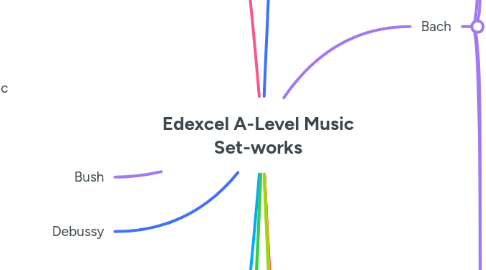
1. Berlioz
1.1. Dynamics: Extreme dynamic contrasts, sudden changes, long/expressive cresc. and dim.
1.2. Rhythm: Flexible, frequent rubato, triplets, dotted rhythms, and hemiolas
1.3. Texture: Varied, contrapuntal (e.g., overlapping string lines), tutti orchestra contrast with solo, dialogue between sections
1.4. Structure: 1st movement of 5 (strange for symphony), sonata form with long intro and coda
1.5. Sonority: Full Romantic orchestral palette, including harp, cor anglais, timpani, mutes, pizzicato, tremolo, and other effects add colour.
1.6. Melody: Idée fixe- a long, lyrical, obsessive melody representing the beloved, reoccurs in different forms. Contrasting lyrical vs. agitated melodic ideas, chromatic vs diatonic. 2nd subject shares similarities with idee fixe
1.7. Instrumentation: Large symphony orchestra, minimum 70 players.
1.8. Tonality: Frequent modulations, starts in C minor, ends in C major. Frequently obscured by chromaticism, travels through many keys- G major, E minor
1.9. Harmony: Chromatic harmony, used expressively as opposed to functionally, perfect cadences to modulate, suspensions, plagal cadences in coda
1.10. Context: Composed in 1830, an early Romantic programmatic symphony. Reflects Berlioz’s obsession with actress Harriet Smithson. Each movement tells part of story: Movement I = his passion and unrequited love.
1.11. WL: Beethoven – Symphony No. 6: Programmatic structure(sonata rondo) and pastoral storytelling. Tchaikovsky – Romeo and Juliet Overture: Love and fate themes, emotional development. Mahler – Symphony No. 1: Programmatic, large-scale orchestration, recurring themes. Liszt – Les Préludes: Symphonic poem with emotional and dramatic contrasts, focus on chromatic harmony
2. Bush
3. Debussy
4. Pine
4.1. Lady Day (and John Coltrane)
4.1.1. Dynamics: Mostly moderate dynamic range, some change in the saxophone solo
4.1.2. Rhythm: Strong backbeat, syncopation, triplet-based rhythms, swung feel
4.1.3. Texture: Layered texture: saxophone, vocals, keyboard/synth, bass, drum. Occasional contrapuntal texture between voice and sax lines.
4.1.4. Structure: Verse-chorus pop structure, with instrumental breaks. Includes extended instrumental sax solo. Modified 12-bar blues
4.1.5. Sonority: melismatic vocals, conversation/key click loops, extended sax techniques(slides, gliss, tongue clicks)
4.1.6. Melody: Soulful and modal, blue notes. Improvisatory solo, uses blues scale and chromatic passing notes. Melodic hooks based on short, repeated motifs. Focus on minor 3rd
4.1.7. Instrumentation: Vocals (Lynden Hall), saxophone, electric bass, programmed drums, synth. Combines acoustic jazz instruments with electronic production.
4.1.8. Tonality: C minor, modal inflections
4.1.9. Harmony: Extended chords (7ths, 9ths), common in jazz and soul. Chromatic passing chords in sax solos.
4.2. Inner State of Mind
4.2.1. Dynamics:
4.2.2. Rhythm:
4.2.3. Texture:
4.2.4. Structure:
4.3. Love and Affection
5. Elfman
6. Saariacho
7. Herrmann
8. Bach
8.1. Movement 1
8.1.1. Dynamics: Terraced, volume shifts occur through texture
8.1.2. Rhythm: Driven semiquaver rhythms in lower parts, rhythmic imitation across voices
8.1.3. Texture: Fugal texture with dense contrapuntal layering, instrumental doubling and imitation
8.1.4. Structure: Ritornello form, stretto entries in vocal lines
8.1.5. Sonority: Festive scoring includes trumpet and oboes, orchestral doubling of vocal lines
8.1.6. Melody: Motivic use of the cantus firmus, embellished melodic lines in the orchestral parts, sequences, word painting, some chromaticism
8.1.7. Instrumentation: SATB, oboes, strings, continuo, trumpets
8.1.8. Tonality: D major(celebratory), brief modulations to related keys, A major, B minor
8.1.9. Harmony: Functional harmony using cadences, diatonic base with occasional chromaticism
8.2. Movement 2
8.2.1. Dynamics: Same as mv.1
8.2.2. Rhythm: Syncopated and dotted rhythms in the bass, steady rhythm in the soprano cantus firmus
8.2.3. Texture: Contrapuntal interaction between bass solo and oboe dialogue, heterophony
8.2.4. Structure: Canon between oboe and soprano, ternary-like structure with contrast
8.2.5. Sonority: Expressive oboe obbligato provides counterpoint to the bass line, contrasting instrumental and vocal lines.
8.2.6. Melody: Melismatic bass line Static soprano line preserves the original chorale melody, oboes double
8.2.7. Instrumentation: Soprano/Bass duet, solo oboe
8.2.8. Tonality: Same as mv.1
8.2.9. Harmony: Expressive suspensions through melisma, diatonic and functional
8.3. Movement 8
8.3.1. Dynamics: Same as mv.1 and 2
8.3.2. Rhythm: Simple, regular crotchet movement, homorhythmic lines
8.3.3. Texture: Homophonic, chordal- typical of chorale
8.3.4. Structure: Four-phrase symmetrical chorale form, cadence at phrase end
8.3.5. Sonority: Accompaniment doubles vocals
8.3.6. Melody: Stepwise and diatonic lines, syllabic text-setting, melodic simplicity
8.3.7. Instrumentation: SATB, orchestral accompaniment
8.3.8. Tonality: Same as mv.1 and 2
8.3.9. Harmony: Clear-cut cadences at the end of each phrase, traditional progressions
8.4. Context and WL
8.4.1. Composed in 1723, for Reformation Day in Leipzig, move from Latin to German
8.4.2. Based on Martin Luther’s 1529 hymn, Cantus Firmus
8.4.3. Part of Bach’s chorale cantata cycle, composed for St Thomas Catherdral as Kantor- rich and resources
8.4.4. WL: Handel – “Rejoice Greatly” from Messiah (1741), melismatic solo writing( mv.2 link), ornamented instrumental ritornello(mv.1), Dmajor, celebratory key