


Defining and Non-Defining Relative Clauses
作者:Tania Lisbeth
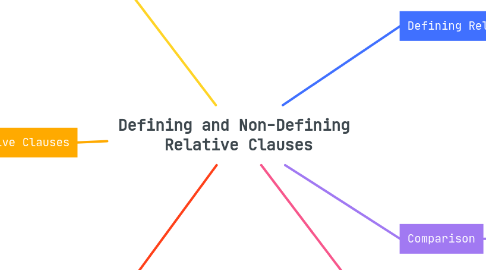
1. What are Relative Clauses?
1.1. Clauses that give more information about a noun
1.2. Usually begin with a relative pronoun (who, which, that, etc.)
2. Non-Defining Relative Clauses
2.1. Extra information (can be omitted)
2.2. Always use commas
2.3. Examples:
2.3.1. My brother, who lives in Canada, is a doctor.
2.3.2. This book, which I borrowed from the library, is amazing.
2.4. Relative Pronouns:
2.4.1. who – for people
2.4.2. which – for things
2.5. Note: 'That' is NOT used in non-defining clauses
3. Common Mistakes
3.1. Using "that" in non-defining clauses
3.2. Omitting commas in non-defining clauses
4. Defining Relative Clauses
4.1. Essential information (cannot be omitted)
4.2. No commas used
4.3. Examples:
4.3.1. The man who called you is my brother.
4.3.2. This is the book that won the award.
4.4. Relative Pronouns:
4.4.1. who – for people
4.4.2. which – for things
4.4.3. that – for people or things (informal)