


1. Helps teachers improve
1.1. teaching development
1.1.1. reflective tool
1.2. professional development
1.2.1. formative tool
2. Important in education
2.1. not just seeing
2.1.1. multi-sensory process
2.1.2. it also means
2.1.2.1. understanding
2.1.2.2. describing
2.1.2.2.1. what we see
2.1.2.3. explaining
2.2. collect information systematically
2.2.1. providing insight into learner behaviour
2.2.2. classroom dynamics
2.2.3. teacher practices
3. Often includes
3.1. pre observation
3.2. post observation
3.2.1. both contextualize and help to understand
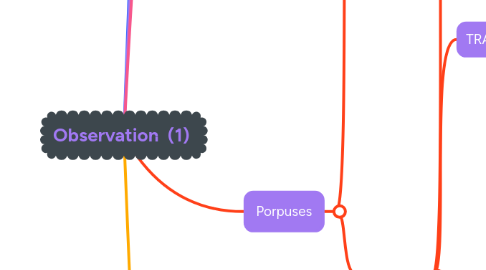
4. Porpuses
4.1. Determines
4.1.1. frequency
4.1.2. focus
4.1.3. post observation actions
4.2. 4 main
4.2.1. PROFESSIONAL DEVELOPMENT
4.2.1.1. teacher growth
4.2.1.1.1. Goal
4.2.1.2. Role
4.2.1.2.1. observer (teacher)
4.2.1.3. Methods
4.2.1.3.1. pre observation
4.2.1.3.2. post observation
4.2.1.3.3. benefits
4.2.2. TRAINING
4.2.2.1. refining teacher skills
4.2.2.2. Goal
4.2.2.2.1. develop specific strategies and skills in trainees
4.2.2.3. Role
4.2.2.3.1. trainer designs schedule
4.2.2.3.2. trainees observe experts
4.2.2.4. Structure
4.2.2.4.1. pre determined observation focus
4.2.2.4.2. observing schedule
4.2.2.4.3. feedback provided by the expert (post observation)
4.2.2.5. Benefits
4.2.2.5.1. builds confidence in applying teaching skills and techniques
4.2.2.5.2. builds confidence in applying teaching skills and techniques
4.2.3. EVALUATION
4.2.3.1. Performance assessment and accountability
4.2.3.2. Goal
4.2.3.2.1. process information about promotion or competency
4.2.3.3. Role
4.2.3.3.1. observe the main trainee
4.2.3.3.2. the focus is on judgment rather than personal growth
4.2.3.4. Feature
4.2.3.4.1. multi focus observation
4.2.3.4.2. post observation
4.2.3.4.3. pre observation
4.2.3.5. Benefits
4.2.3.5.1. informs evaluation planning
4.2.4. RESEARCH
4.2.4.1. Generating knowledge and theory
4.2.4.2. Goal
4.2.4.2.1. generate
4.2.4.3. Role
4.2.4.3.1. researcher is the main one
4.2.4.3.2. observers are informed but they don’t see results soon
4.2.4.4. Method
4.2.4.4.1. structured observation
4.2.4.4.2. consent is observed
4.2.4.5. Benefits
4.2.4.5.1. contributes to
5. Considerations
5.1. teachers may switch between each main perspectives
5.2. focus on evaluation rather than development
5.3. every single observation must have
5.3.1. its objective
5.3.2. its focus
5.3.3. its procedures
5.4. observation is complex
5.4.1. involves
5.4.1.1. thinking
5.4.1.2. analyzing
5.4.1.3. connecting with what we want to see as teachers