Reporting and Evaluating Research
作者:Peter Snell
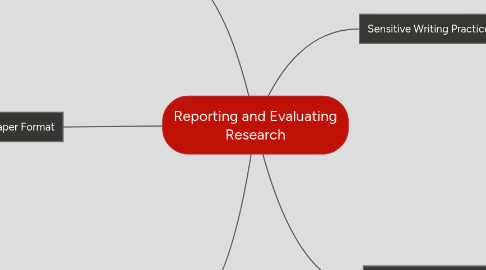
1. Consider the Audience - May need to create separate reports for each audience
1.1. University Faculty Members
1.2. Journal
1.3. Policymakers
1.4. Educators or professionals in the field
1.5. Conference paper
1.6. Fellow researchers
2. Paper Format
2.1. Title Page
2.2. Abstract
2.3. Introduction
2.4. Review of the Literature (quantitative)
2.4.1. Procedure (qualitative)
2.5. Methods (quantitative)
2.5.1. Preliminary Findings (qualitative)
2.6. Results (quantitative)
2.7. Discussion
2.8. References
2.9. Appendices
3. Qualitative Structure Approaches - can be more flexible
3.1. Scientific - similar to quantitative
3.2. Storytelling - uses literary devices
3.3. Thematic - Focuses on the themes and participant quotations
3.4. Descriptive - "A Day in the Life" approach
3.5. Grounded Theory - Focuses on an established theory or modifies one based on participant views
3.6. Experimental - Fictional story, poem, drama, play, etc.
4. Sensitive Writing Practices
4.1. Papers are rejected if insensitive to others
4.2. Avoid demeaning attitudes
4.3. Biased assumptions
4.4. Awkward constructions that suggest bias towards a particular group
5. Evaluating Research Studies - General Standards
5.1. Does it match the qualifications specified for publication?
5.2. Is it useful for my situation?
5.3. Does it address key issues?
5.4. Are all 6 steps of conducting research present and clearly defined?


